Feature Overview
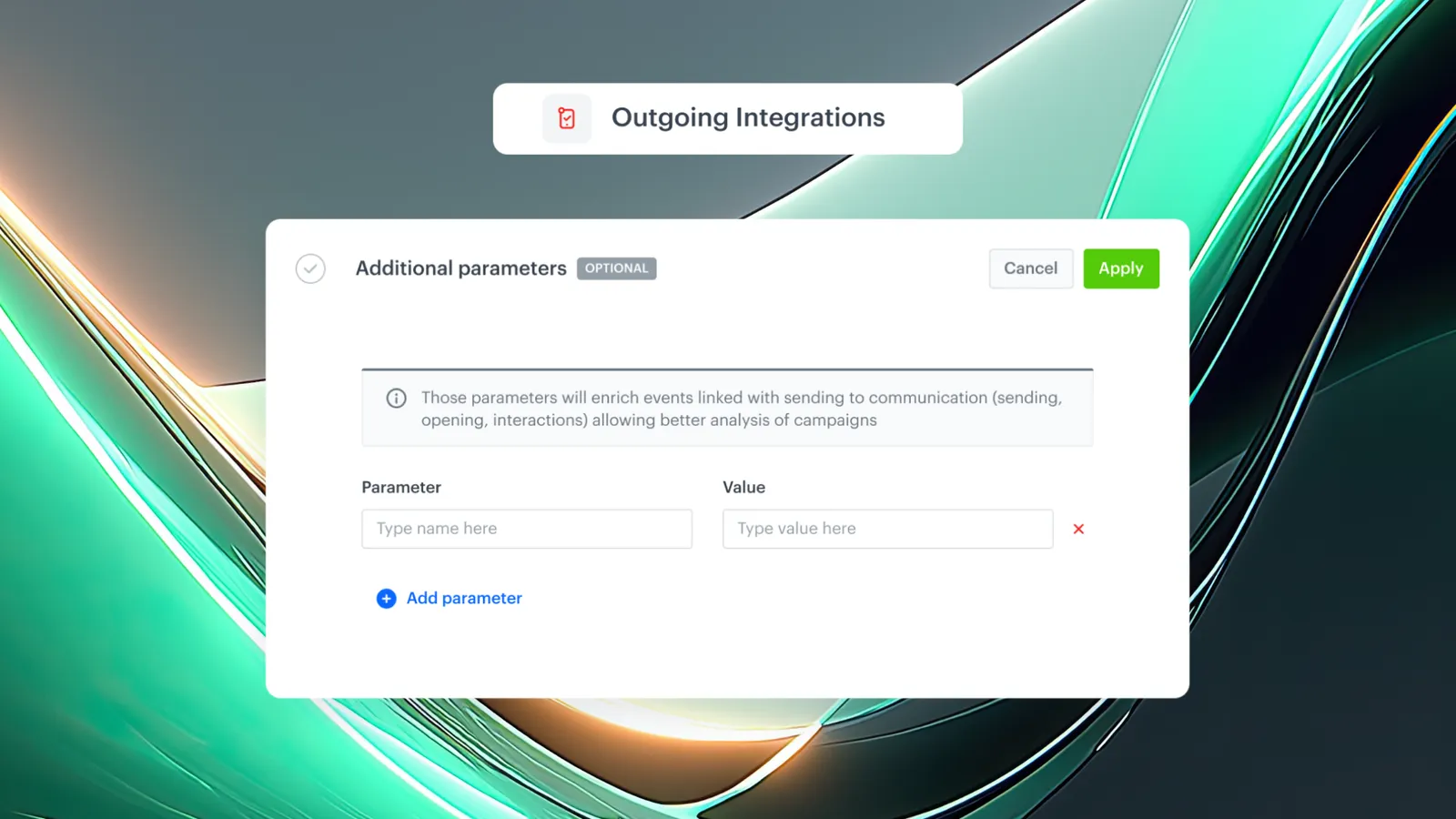
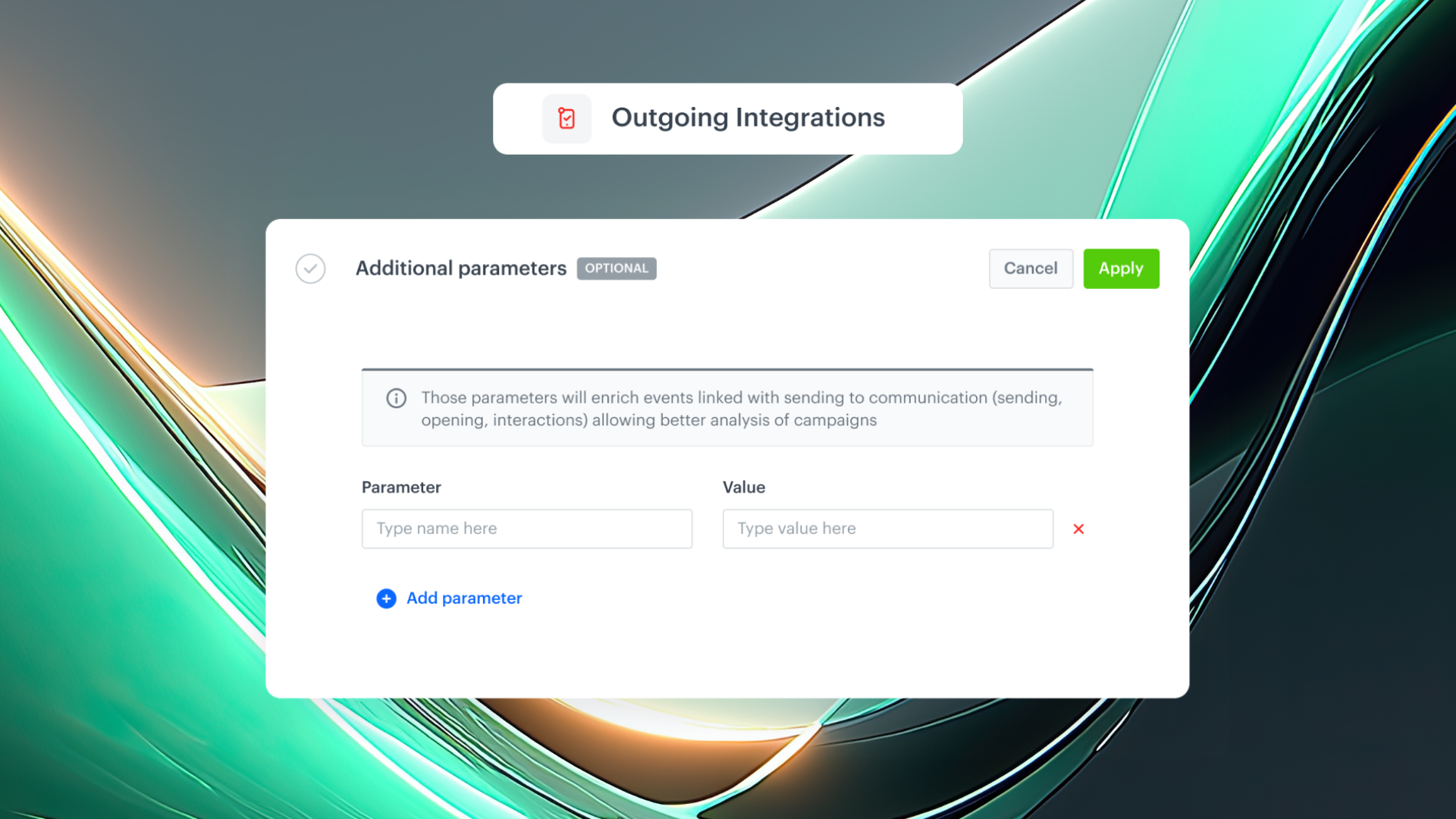
Additional Parameters in Outgoing Integrations is a capability in Synerise that allows users to define custom key-value pairs for response events when configuring outgoing webhooks or reusable integrations. These parameters enrich the event stored in Synerise when a response is received from an external system, with full support for dynamic values via Jinjava expressions.
The feature is available in the Outgoing Integration configuration within the Synerise Automation module.
What Are Additional Parameters in Outgoing Integrations?
Additional Parameters is a configuration option in outgoing webhooks and reusable integrations that lets users add custom key-value pairs to the response event. When an external system returns a response, these parameters are included in the stored event alongside the original response data. Parameters support static values and dynamic Jinjava expressions that reference trigger data, customer attributes, or previous workflow node outputs.
The additional parameters do not affect the original response — they only enrich how the response is saved in Synerise.
Why Additional Parameters in Outgoing Integrations Matter
Storing raw responses from external systems often lacks the context needed for filtering, analysis, or downstream automation. Without additional metadata, it can be difficult to differentiate response events from different contexts or to associate them with specific campaign or customer data.
Additional Parameters address this by:
- Allowing custom identifiers and metadata to be added to response events for easier filtering and analysis
- Differentiating requests that share the same structure but were sent in different contexts
- Supporting dynamic personalization via Jinjava — values can reflect the exact trigger and customer context
- Enriching stored data without modifying the original external system response
Key Capabilities
Custom key-value pairs for response events
Users define additional parameters as key-value pairs that are included in the response event when stored in Synerise. These parameters are fully customizable and can contain any metadata relevant to the integration context.
Dynamic values via Jinjava
Parameter values support Jinjava expressions, allowing dynamic references to trigger data, customer attributes, or data from previous workflow nodes. This ensures that the stored response event reflects the exact context of the request.
Works with custom webhooks and reusable integrations
Additional parameters are available in both custom webhook configurations and reusable integration setups — providing consistent functionality across all outgoing integration types.
How Additional Parameters in Outgoing Integrations Work
- Navigate to Integration > Outgoing in Synerise.
- Choose a custom webhook or reusable integration.
- Define the request and the response event name.
- In the "Additional Event Parameters" section, add key-value pairs.
- Use static values or Jinjava expressions to reference trigger data, customer attributes, or previous node outputs.
- When the external system responds, the additional parameters are included in the stored event.
Example Use Case
A company uses an outgoing webhook to send order data to a fulfillment system. To differentiate response events by region, they add an additional parameter with key "region" and a Jinjava expression that pulls the customer's region from their profile. When the fulfillment system responds, the stored event includes the region metadata — enabling the analytics team to filter and analyze fulfillment responses by region without additional data processing.
FAQ
What are Additional Parameters in Outgoing Integrations?
Custom key-value pairs added to response events when configuring outgoing webhooks or reusable integrations, enriching the stored event with metadata and context.
Do additional parameters affect the original response?
No. They only enrich the event as stored in Synerise — the original external system response is not modified.
Can values be dynamic?
Yes. Jinjava expressions are supported, allowing dynamic references to trigger data, customer attributes, and previous workflow node outputs.
Key Facts
| Attribute | Value |
|---|---|
| Feature | Additional Parameters in Outgoing Integrations |
| Product | Synerise |
| Module | Automation (Outgoing Integrations) |
| Purpose | Enrich response events with custom key-value pairs and dynamic Jinjava values |
| Applies to | Custom webhooks and reusable integrations |
| Dynamic values | Jinjava expressions supported |
| Documentation | hub.synerise.com — Outgoing Webhook |
Related Concepts
- Outgoing integrations in Synerise
- Custom webhooks and reusable integrations
- Jinjava templating in Synerise
- Event enrichment and metadata
- Synerise Automation workflows
TL;DR
Additional Parameters in Outgoing Integrations allows users to add custom key-value pairs to response events in Synerise when configuring outgoing webhooks or reusable integrations. Values support Jinjava expressions for dynamic context. The parameters enrich stored events with metadata — without modifying the original external system response.