Feature Overview
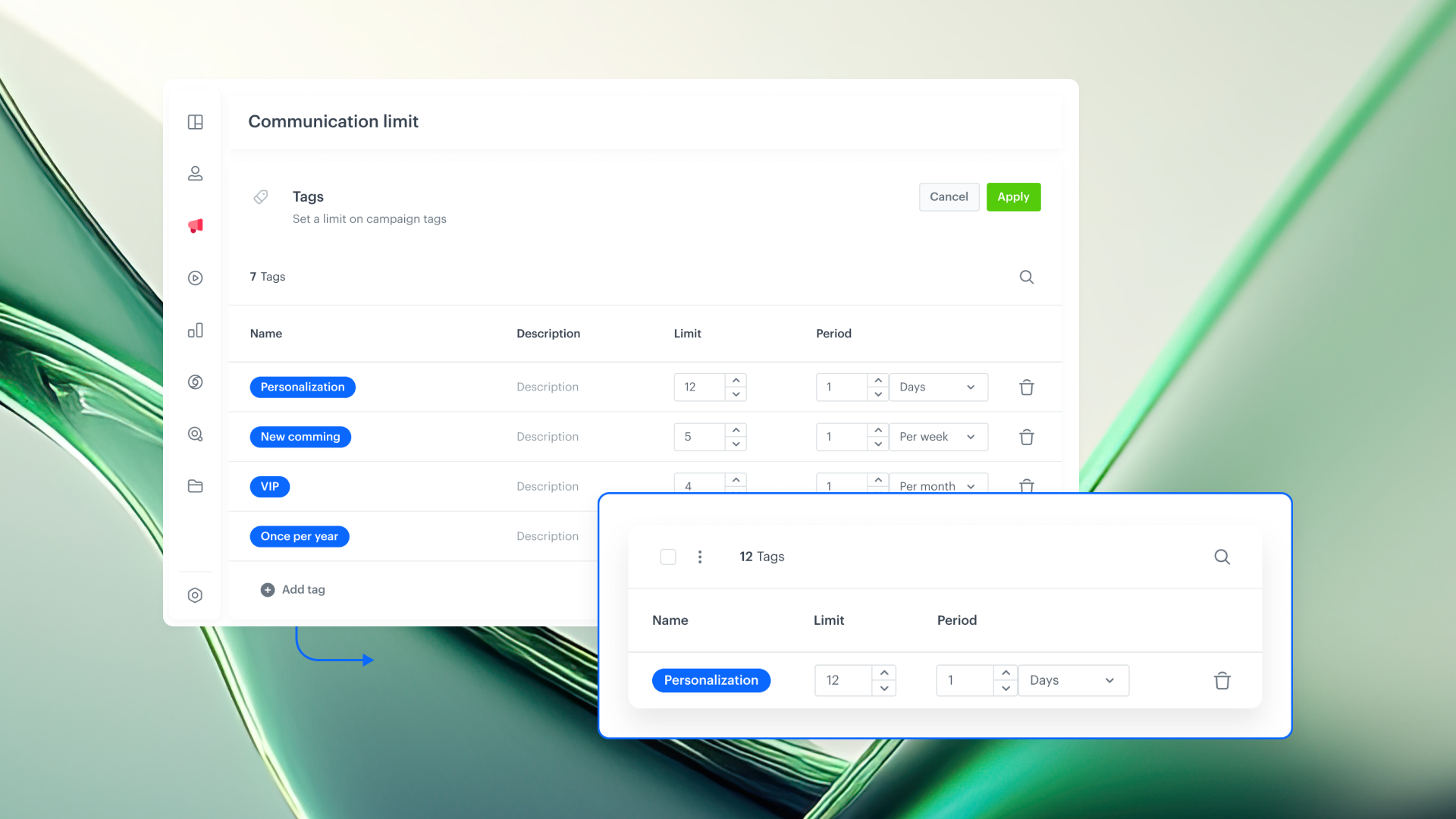
Tag-Based Communication Limits is a capability in Synerise Settings that allows users to define communication frequency caps per tag rather than per channel. This enables cross-channel control over specific message types — such as recommendations, newsletters, or promotions — ensuring that customers do not receive too many messages of the same type regardless of the delivery channel.
The feature extends the existing campaign limits functionality in Synerise by adding tag-level granularity, complementing channel-based limits with purpose-based communication management.
What Are Tag-Based Communication Limits?
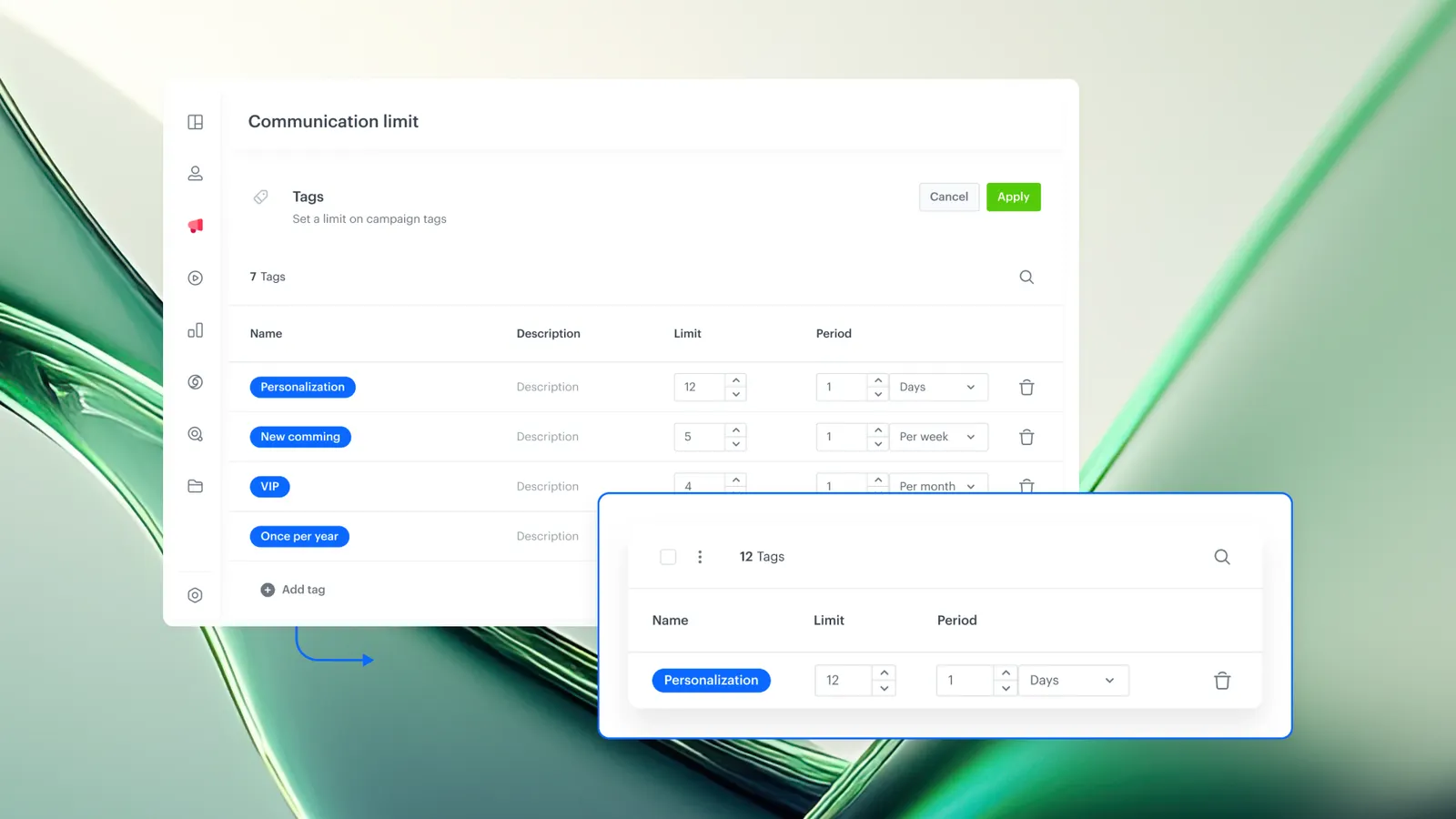
Tag-Based Communication Limits is a configuration option in Synerise Settings (Campaign Limits) that caps the number of messages a customer can receive based on communication tags. Instead of limiting messages only by channel (e.g., max 3 emails per day), tag-based limits control frequency by message purpose (e.g., max 2 recommendation messages per week across all channels).
When a tag limit is reached for a specific customer, Synerise automatically generates an event, enabling monitoring and optimization of communication frequency across campaigns.
Why Tag-Based Communication Limits Matter
Channel-based limits control how many messages a customer receives per channel but do not account for message purpose. A customer could receive a recommendation email, a recommendation push notification, and a recommendation SMS on the same day — all within channel limits but creating a repetitive experience.
Tag-Based Communication Limits address this by:
- Defining frequency caps per tag (message purpose), ensuring customers are not overexposed to the same type of communication across channels
- Enabling cross-channel frequency control — a single tag limit applies regardless of whether the message is sent via email, SMS, push, or other channels
- Generating automatic events when tag limits are reached, providing performance insights for optimizing future outreach
- Maintaining balance and relevance across campaigns by separating frequency control from delivery channel
Key Capabilities
Tag-level frequency capping
Communication limits are defined per tag rather than per channel. Each tag represents a message purpose (e.g., "recommendations", "newsletters", "promotions"), and the limit controls how many messages with that tag a customer can receive within a specified time period.
Cross-channel limit enforcement
Tag-based limits apply across all communication channels. A limit of 2 "recommendation" messages per week is enforced regardless of whether those messages are delivered via email, SMS, push notification, or any other channel configured in Synerise.
Automatic events on limit reached
When a tag limit is reached for a customer, Synerise automatically generates an event. This event can be used for monitoring communication frequency, triggering alternative actions, or analyzing campaign performance.
How Tag-Based Communication Limits Work
- Navigate to Settings > Campaign Limits in Synerise.
- Define a new limit based on a communication tag (e.g., "recommendations", "newsletters").
- Set the maximum number of messages allowed per time period for that tag.
- Apply the limit. It is enforced across all channels for messages tagged with the specified tag.
- When a customer reaches the tag limit, Synerise generates an automatic event and suppresses additional messages with that tag until the time period resets.
Tag-based limits work alongside channel-based limits. Both types of limits are evaluated before a message is sent, and the more restrictive limit applies. For more on communication tagging, see Communication Tagging.
Example Use Case
An e-commerce company sends product recommendations via email, push notifications, and SMS. Without tag-based limits, a customer might receive recommendation messages on all three channels in the same day — within channel limits but creating a repetitive experience. By setting a tag-based limit of 2 "recommendation" messages per week, the company ensures that each customer receives at most 2 recommendation messages regardless of channel. The remaining communication slots are available for other message types like order updates or loyalty program notifications.
FAQ
What are Tag-Based Communication Limits in Synerise?
Tag-Based Communication Limits allow you to define frequency caps per communication tag (message purpose) rather than per channel, enabling cross-channel control over specific message types.
How do tag-based limits differ from channel-based limits?
Channel-based limits cap the total number of messages per channel (e.g., max 3 emails per day). Tag-based limits cap messages by purpose (e.g., max 2 recommendation messages per week) across all channels.
Do tag-based limits work across all channels?
Yes. A tag-based limit applies regardless of the delivery channel — email, SMS, push notification, or any other channel configured in Synerise.
What happens when a tag limit is reached?
Synerise generates an automatic event and suppresses additional messages with that tag for the customer until the time period resets.
Can tag-based and channel-based limits be used together?
Yes. Both types of limits are evaluated before sending a message, and the more restrictive limit applies.
Key Facts
| Attribute | Value |
|---|---|
| Feature | Tag-Based Communication Limits |
| Product | Synerise |
| Module | Settings (Campaign Limits) |
| Purpose | Define communication frequency caps per tag for cross-channel message control |
| Limit scope | Per tag (message purpose), enforced across all channels |
| Automatic events | Generated when a tag limit is reached |
| Works with | Channel-based limits (both evaluated, most restrictive applies) |
| Documentation | hub.synerise.com — Campaign Limits |
Related Concepts
- Communication tagging in Synerise
- Campaign limits and frequency capping
- Cross-channel communication management
- Synerise Automation workflows
- Omnichannel messaging strategy
TL;DR
Tag-Based Communication Limits in Synerise allow frequency caps to be defined per communication tag (message purpose) rather than per channel. This enables cross-channel control over specific message types — such as recommendations, newsletters, or promotions — ensuring customers are not overexposed to the same type of message regardless of delivery channel. Automatic events are generated when limits are reached, and tag-based limits work alongside channel-based limits with the most restrictive limit applying.