Feature Overview
Reverse ETL Integration with Google BigQuery is an integration in Synerise Automation that enables pulling data from Google BigQuery directly into Synerise. Using a dedicated "Get Data - Reverse ETL" node, users define SQL queries (with support for dynamic Jinjava inserts), authenticate via connection credentials, and import data into Synerise as profiles, events, or other data types. The integration supports incremental data retrieval and works with data transformation rules.
The feature is available through the Get Data - Reverse ETL node in Synerise Automation workflows.
What Is Reverse ETL with Google BigQuery?
Reverse ETL with Google BigQuery is a data integration that allows pulling data from BigQuery into Synerise through automation workflows. Users configure SQL queries to define the data to retrieve, with support for dynamic Jinjava inserts (non-profile tags like metrics and catalog references). The integration supports incremental data retrieval (fetching only new or modified records), data transformation for column mapping, and a query preview showing the first 10 records for verification.
Why Reverse ETL with BigQuery Matters
Organizations storing data in Google BigQuery need to bring that data into Synerise for customer engagement, segmentation, and automation. Without a reverse integration, this requires manual exports and imports — creating delays and inconsistencies.
Reverse ETL with BigQuery addresses this by:
- Enabling direct data pull from BigQuery into Synerise through automation workflows
- Supporting dynamic SQL queries with Jinjava inserts for flexible data retrieval
- Providing incremental data retrieval to fetch only new or modified records
- Integrating with data transformation rules for column mapping and formatting
Key Capabilities
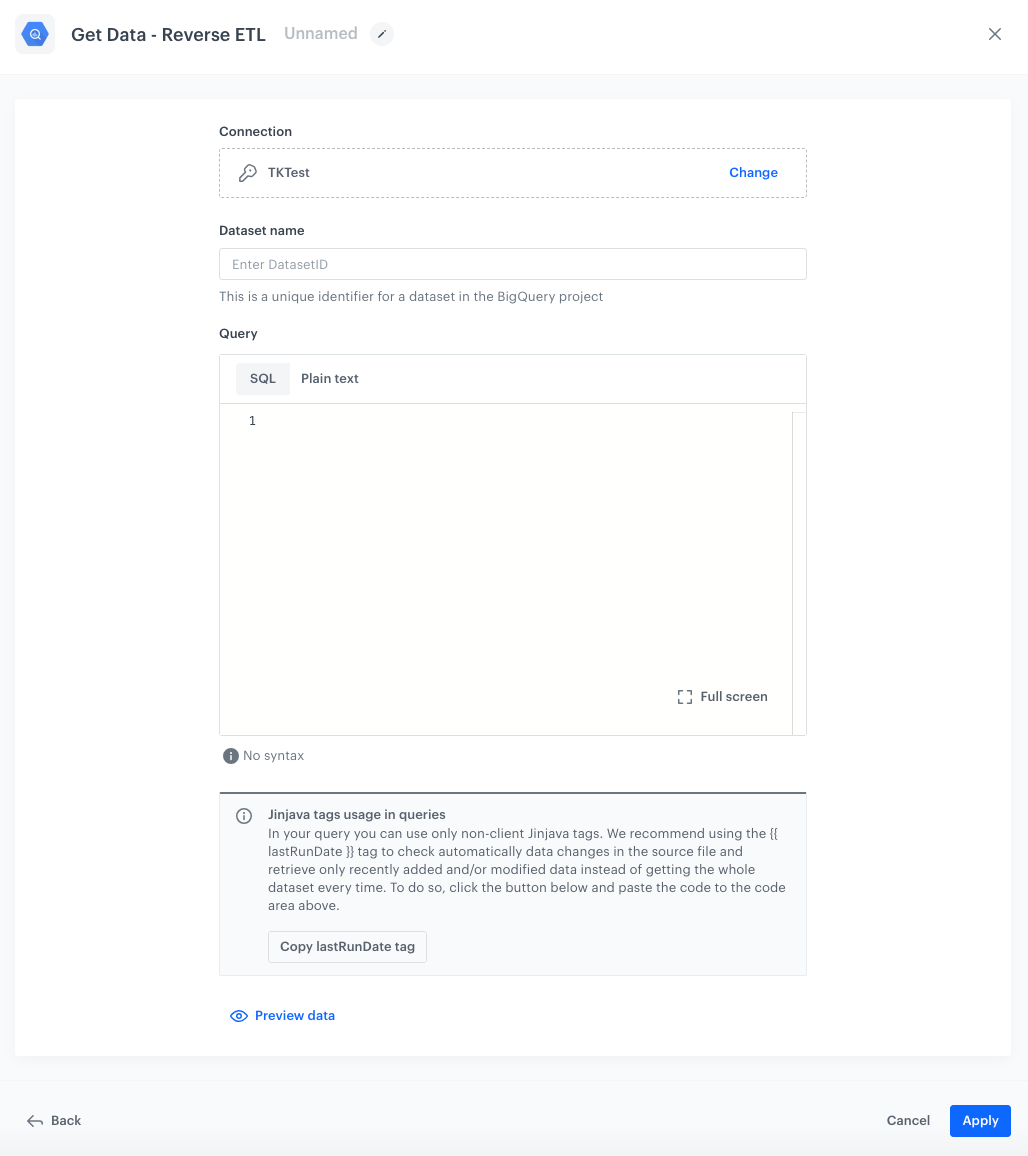
Dynamic SQL querying
Define custom SQL queries to retrieve specific data from BigQuery. Queries support Jinjava inserts for dynamic references to metrics and catalog data.
Incremental data retrieval
Fetch only new or modified records during synchronization, reducing data volume and ensuring efficient data exchange.
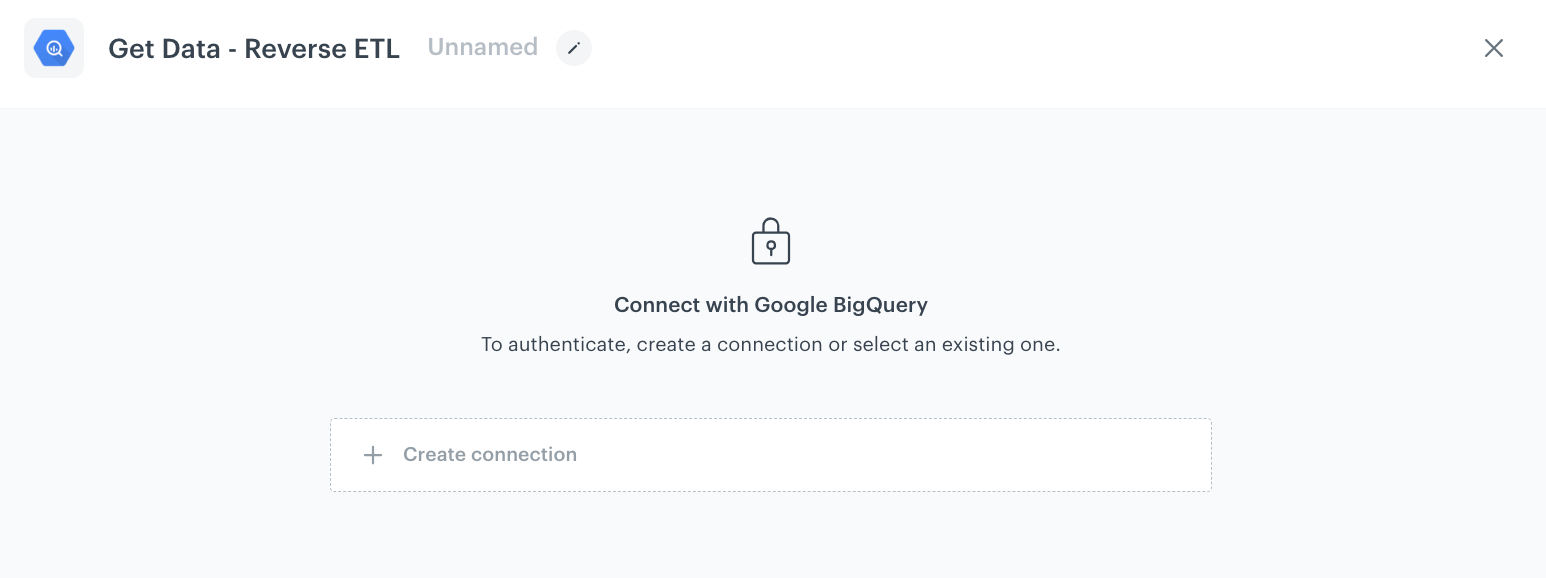
Connection authentication
Authenticate with BigQuery using a private key extracted from the BigQuery tool, managed through Synerise connections.
Data transformation compatibility
Retrieved data can be processed through Synerise's data transformation rules for column renaming, mapping, and formatting before import.
How Reverse ETL with BigQuery Works
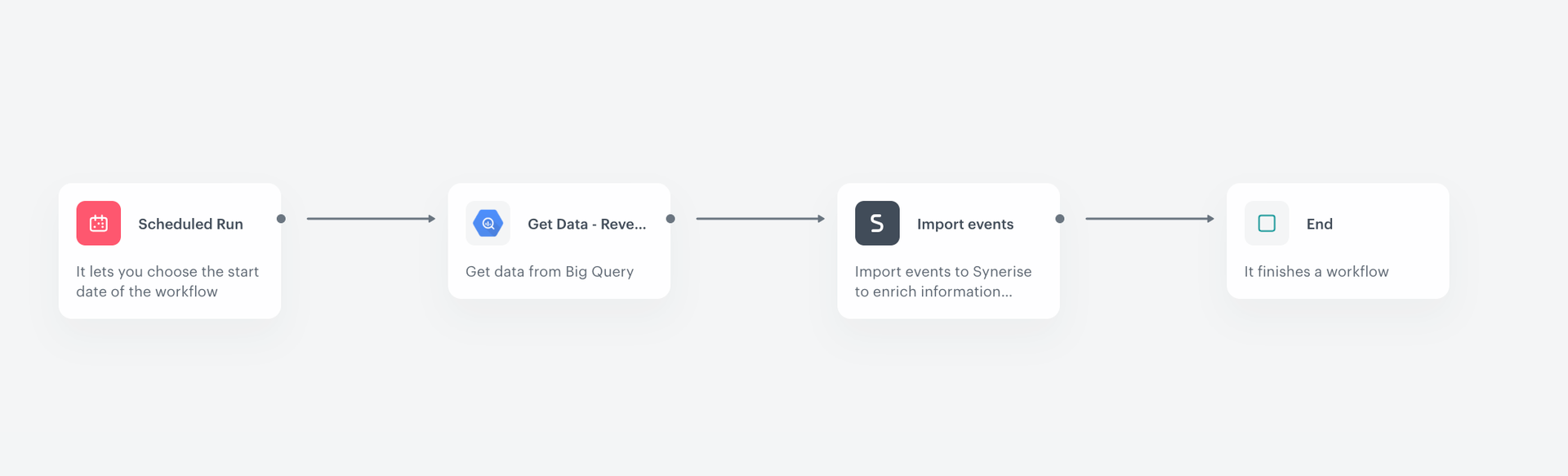
- Create a workflow in Synerise Automation and select a trigger.
- Add the "Get Data - Reverse ETL" node and establish a connection to Google BigQuery.
- Specify the dataset name and define the SQL query (with optional Jinjava inserts).
- Use the preview option to verify the first 10 records.
- Choose the type of imported data (profiles, events, etc.) by connecting the appropriate Synerise node.
- Add the End node and run the workflow.
Example Use Case
A company stores enriched customer segments in Google BigQuery, computed by an external ML pipeline. Using Reverse ETL, they create a workflow that pulls the segment assignments into Synerise daily, using incremental retrieval to fetch only updated records. The imported data is transformed to match Synerise's profile format and used to trigger targeted automation campaigns based on the external ML predictions.
FAQ
What is Reverse ETL with Google BigQuery?
An integration that pulls data from Google BigQuery into Synerise through automation workflows using a dedicated Get Data - Reverse ETL node.
Can I use dynamic values in queries?
Yes. SQL queries support Jinjava inserts for dynamic references to non-profile tags like metrics and catalog data.
Does it support incremental retrieval?
Yes. Only new or modified records can be fetched during synchronization.
What data types can I import?
Profiles, events, and other data types available through Synerise import nodes.
Key Facts
| Attribute | Value |
|---|---|
| Feature | Reverse ETL Integration with Google BigQuery |
| Product | Synerise |
| Module | Automation (Integrations) |
| Purpose | Pull data from Google BigQuery into Synerise |
| Node | Get Data - Reverse ETL |
| Query support | SQL with Jinjava inserts |
| Incremental retrieval | Yes |
| Documentation | hub.synerise.com — Reverse ETL BigQuery |
Related Concepts
- Reverse ETL for Redshift/PostgreSQL
- Databricks integration
- Data transformation in Automation
- Google BigQuery data warehousing
- Connection Management in Synerise
TL;DR
Reverse ETL Integration with Google BigQuery enables pulling data from BigQuery directly into Synerise through automation workflows. Users define SQL queries (with Jinjava inserts for dynamic values), authenticate via connection credentials, and import data as profiles, events, or other types. The integration supports incremental data retrieval and works with Synerise's data transformation rules for column mapping and formatting.