Feature Overview
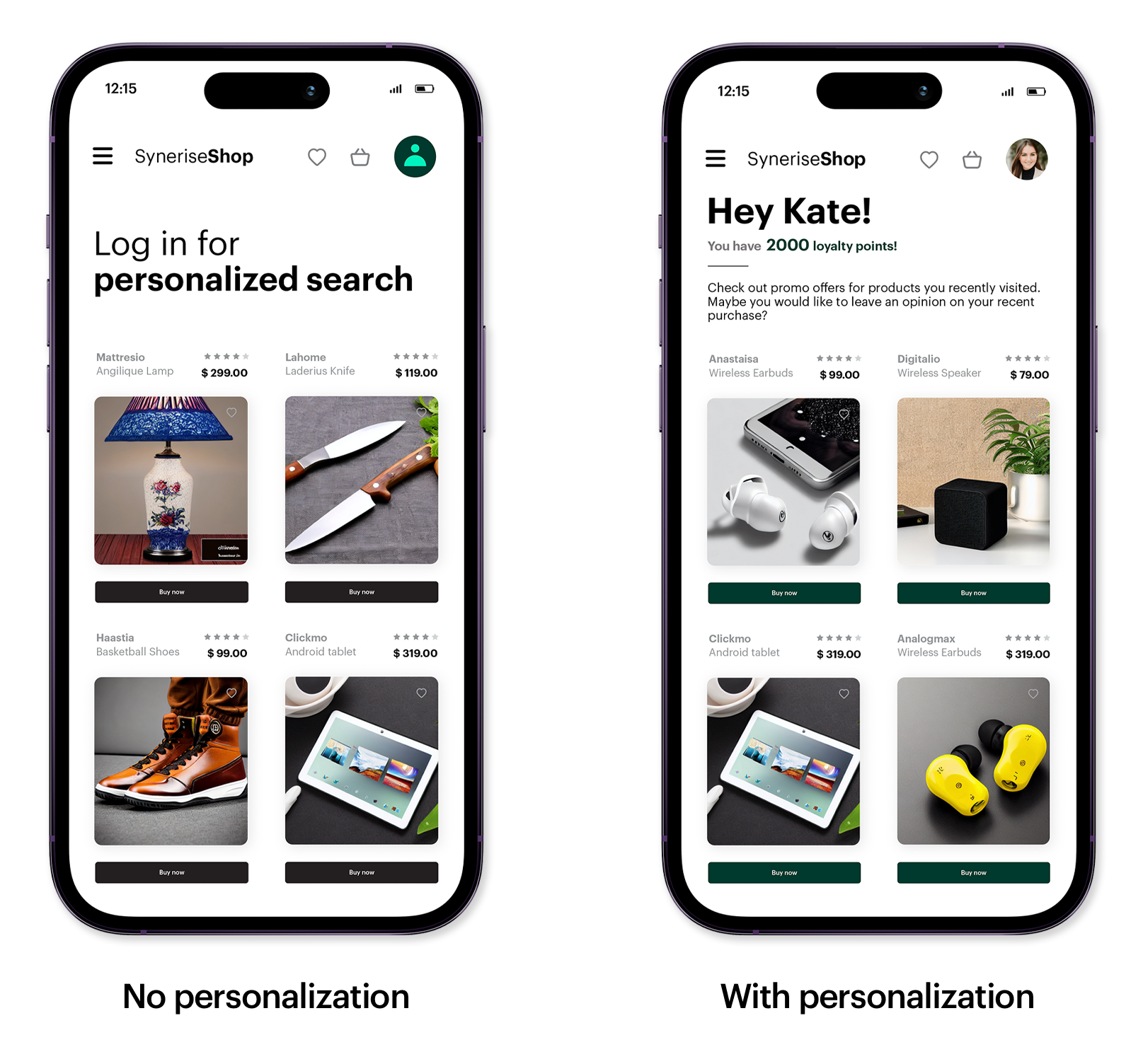
Personalization-First Landing Pages is a capability in Synerise that enables creating dynamic landing pages that adapt in real time to each visitor based on customer data, behaviors, and contextual factors. Pages display personalized content — recommendations, prediction-based offers, location-based promotions, and more — using dynamic variables, inserts, pre-built templates, and visual editors. The feature includes real-time preview, performance analytics, fallback settings, and multichannel distribution.
The feature is available in the Landing Page module within Synerise Campaigns.
What Are Personalization-First Landing Pages?
Personalization-First Landing Pages are dynamic web pages in Synerise that adapt content to each visitor using real-time data. Pages can display personalized elements based on customer profiles, behavioral data, predictions, recommendations, location, weather, time of day, and real-time social proof (trending products). The landing page editor supports inserts (personalized data elements), pre-built templates, visual editors, and code editors with configuration forms. A real-time preview allows visualizing the experience for any customer segment before publishing.
Why Personalization-First Landing Pages Matter
Static landing pages show the same content to every visitor, missing opportunities to engage based on individual preferences, behavior, and context. Creating personalized pages typically requires complex development — increasing time-to-market and limiting marketing team autonomy.
Personalization-First Landing Pages address this by:
- Adapting content in real time using customer data, behaviors, predictions, and contextual factors
- Providing intuitive editing tools (visual editor, code editor, configuration forms) accessible to non-technical users
- Supporting advanced personalization factors: location, weather, time of day, and real-time social proof
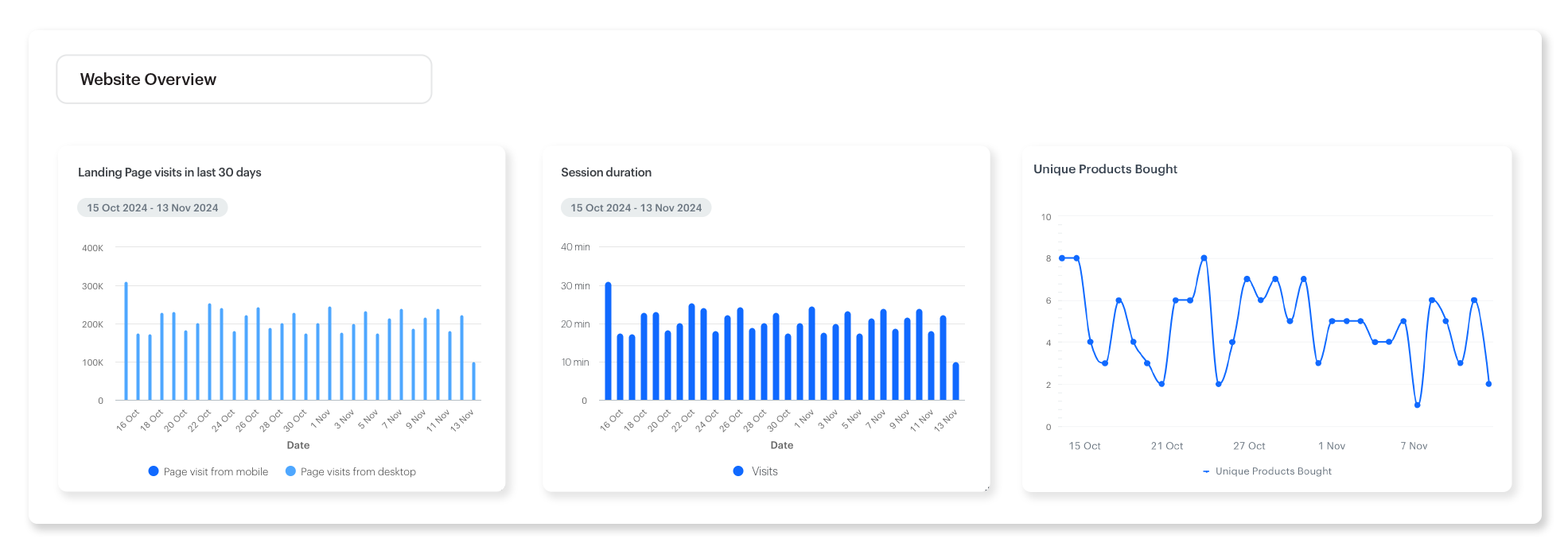
- Including performance analytics (visits, clicks, conversions), real-time preview, and fallback settings
Key Capabilities
Advanced personalization factors
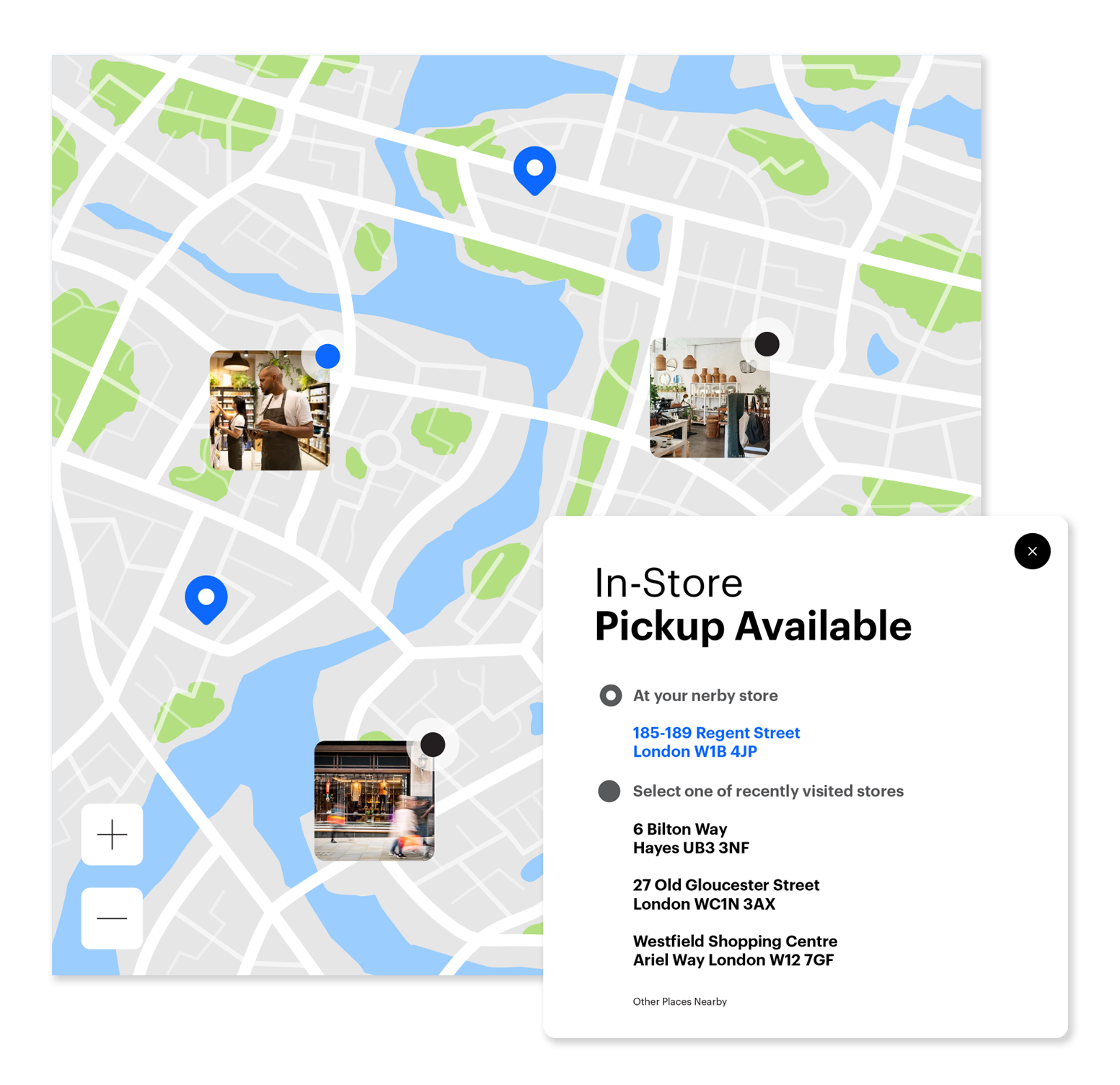
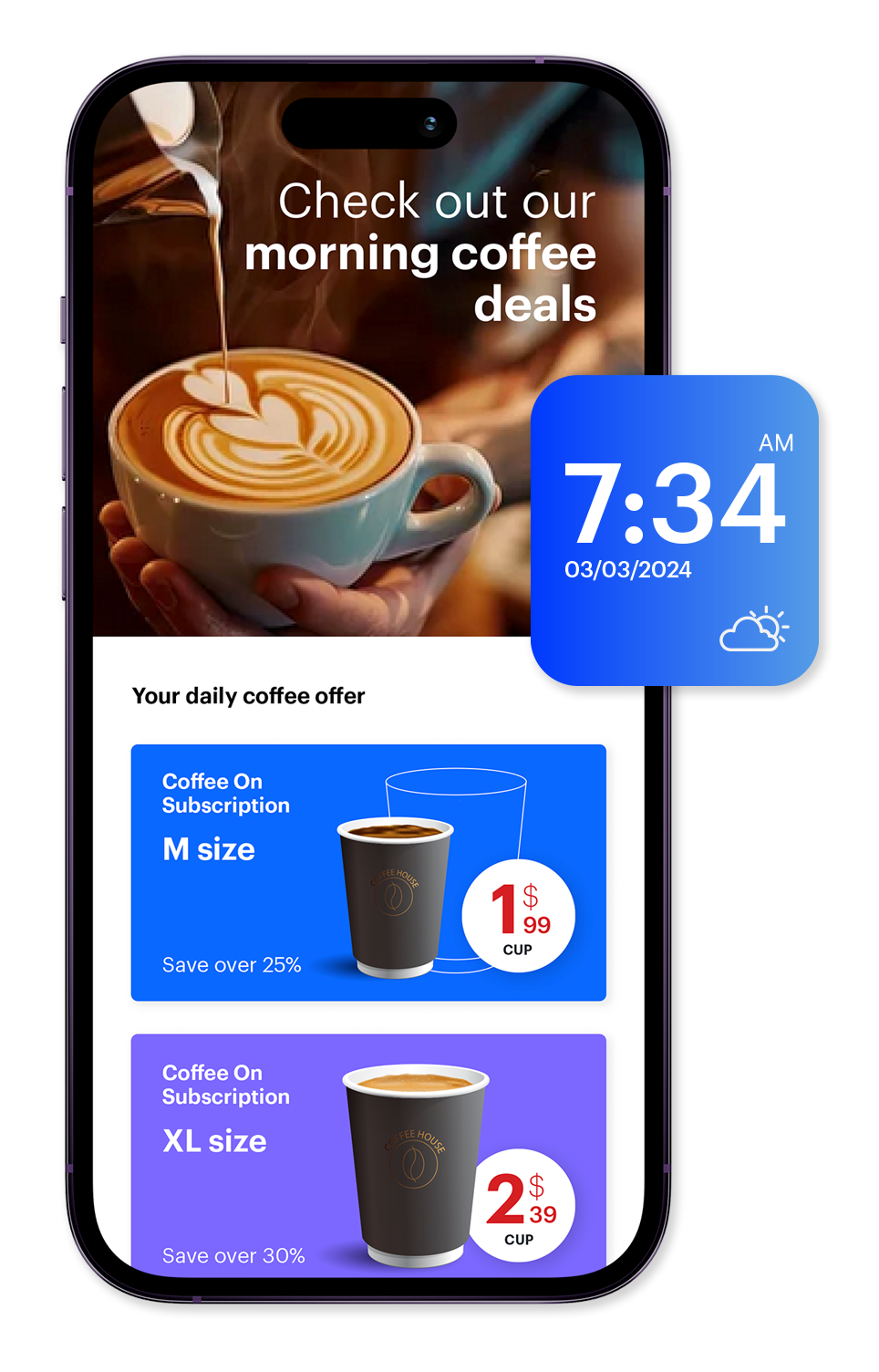
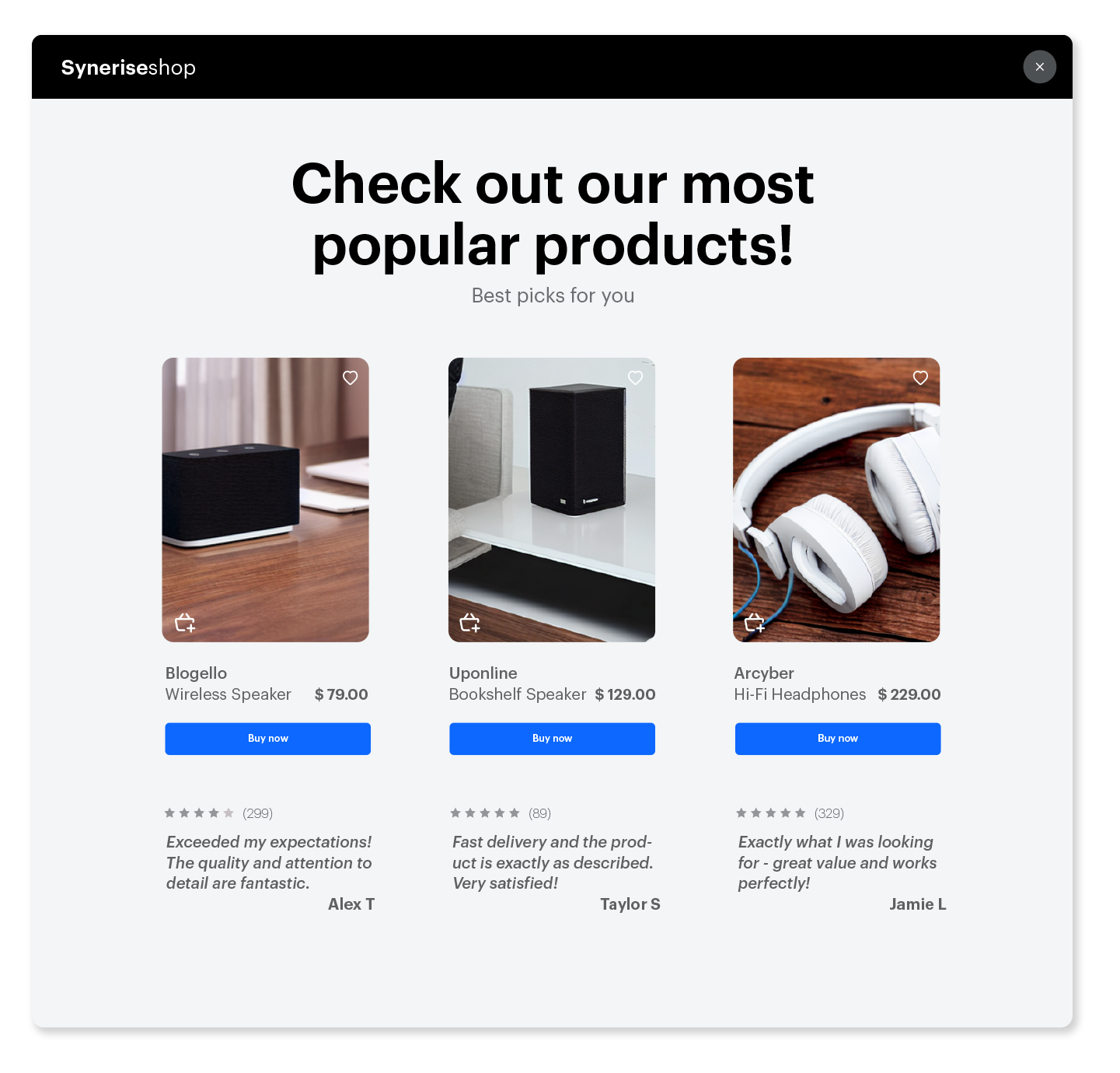
Content adapts based on multiple contextual signals: customer location (regional promotions), weather (weather-appropriate product suggestions), time of day (morning/evening messaging), and real-time social proof (trending/most-viewed products).

Editing and personalization tools
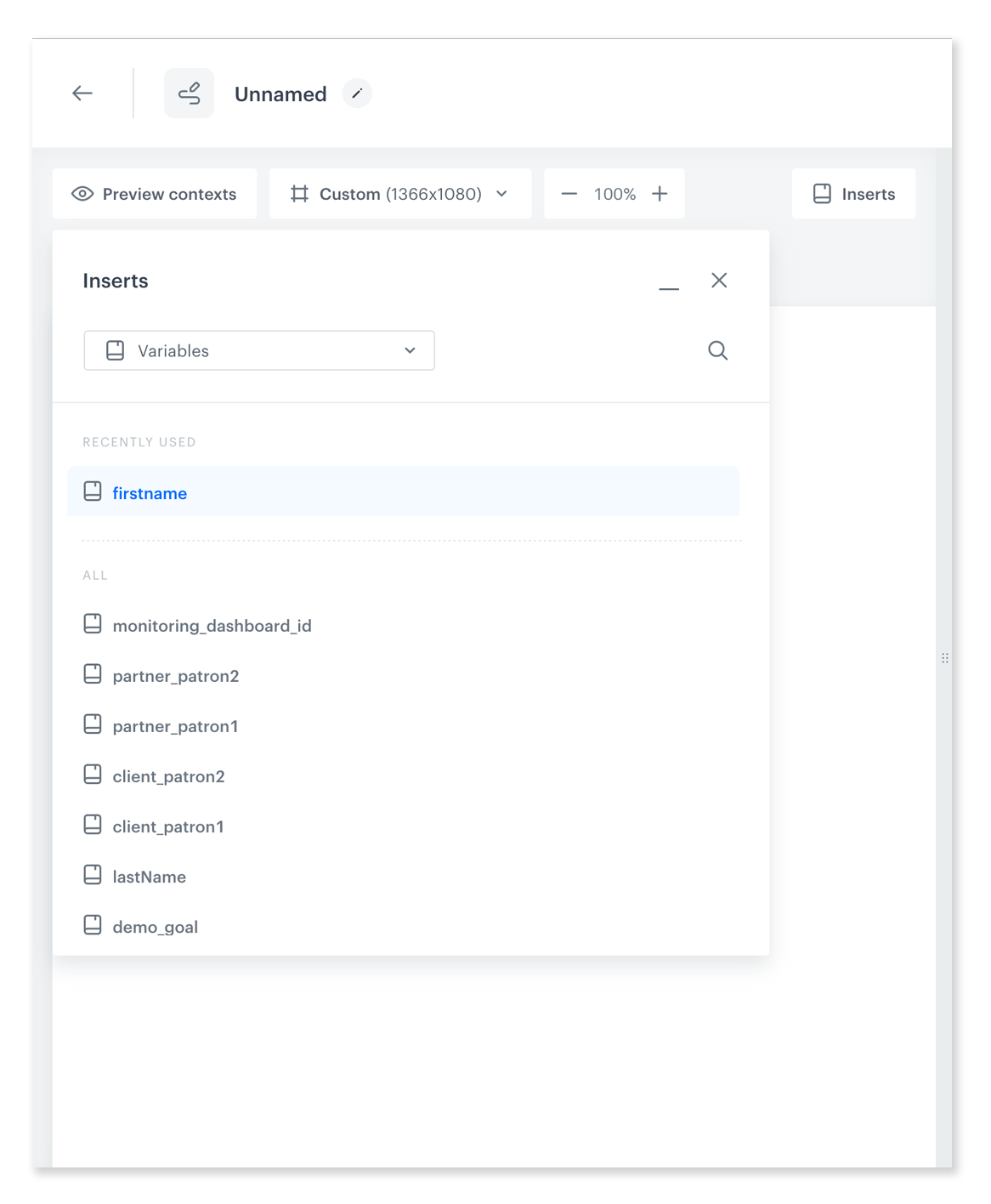
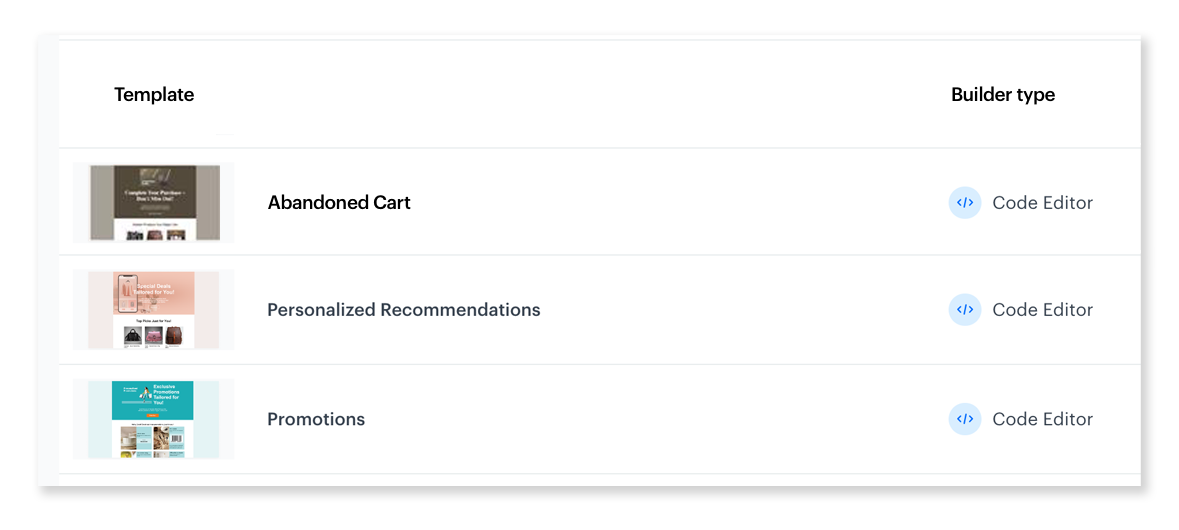
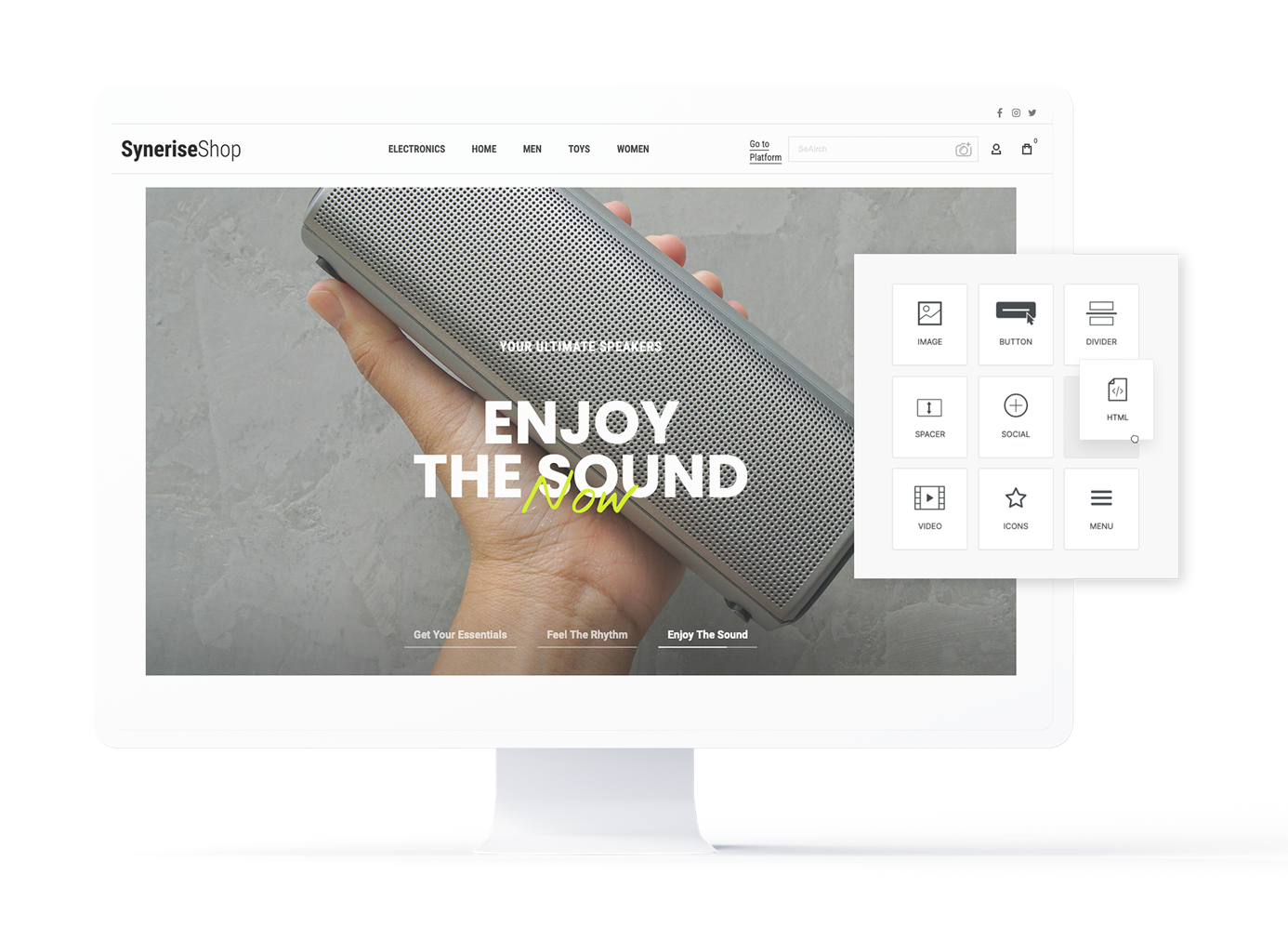
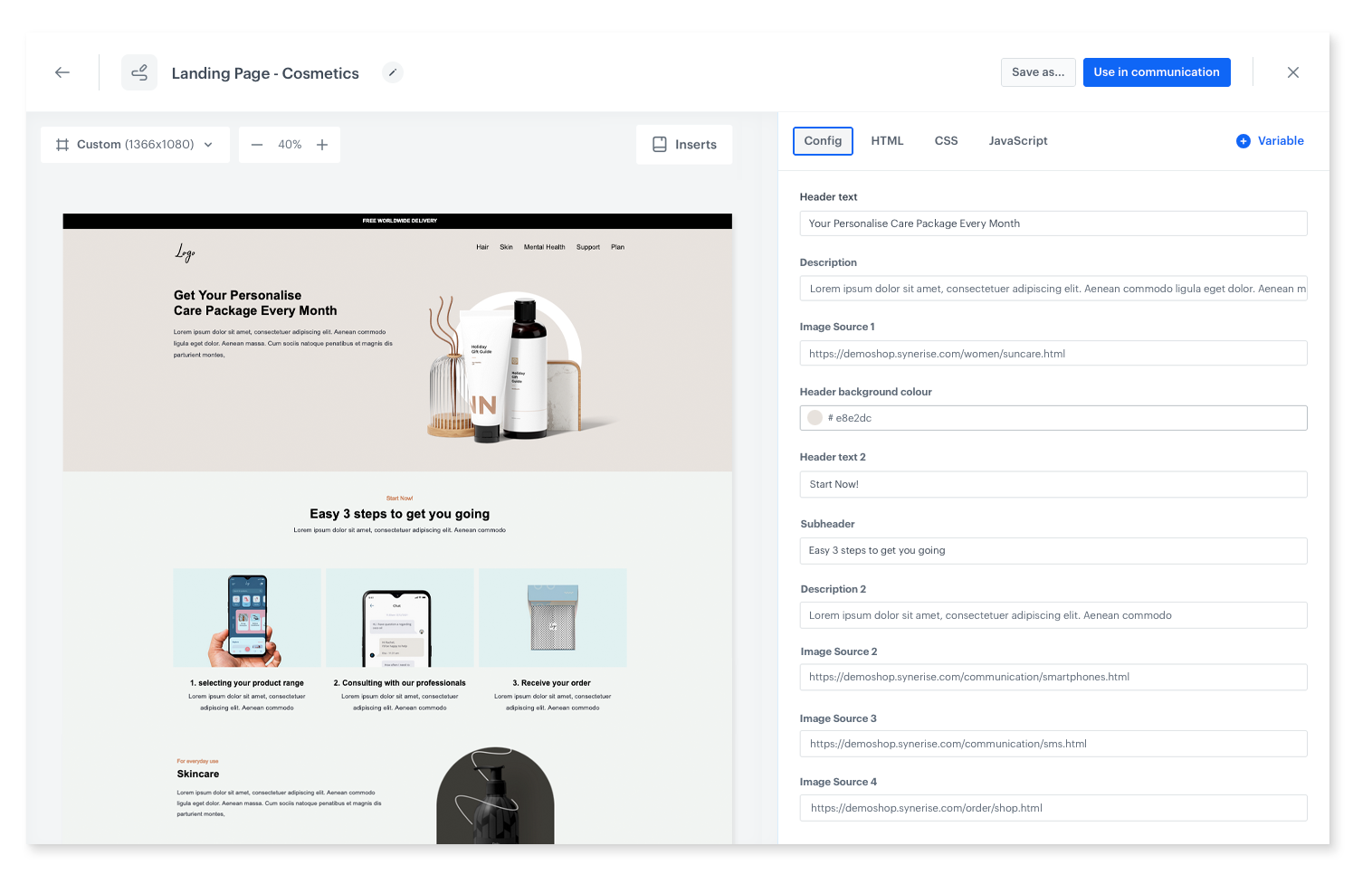
Inserts allow embedding personalized elements (names, recommendations, loyalty points). Pre-built templates provide optimized layouts. Visual editors enable no-code page design. Code editors with configuration forms offer full customization while remaining accessible to non-technical users.
Real-time preview and analytics
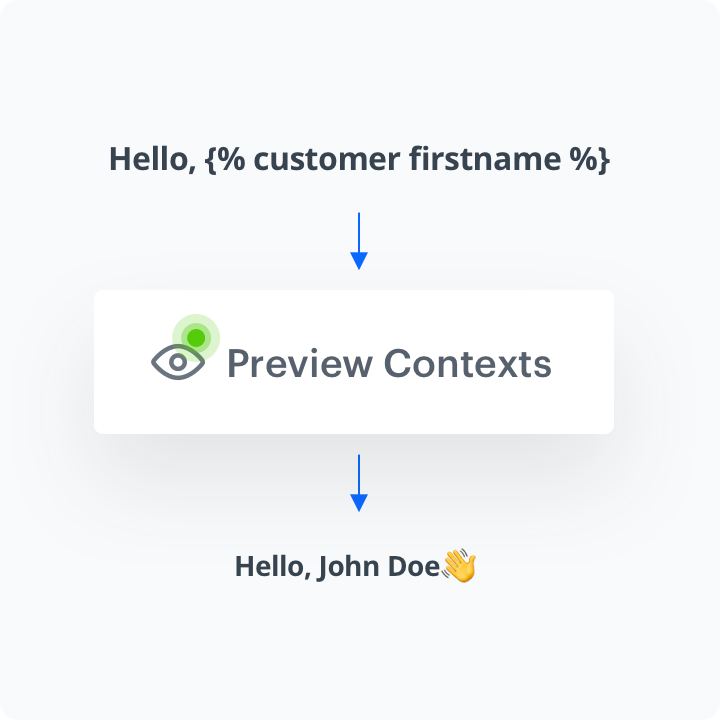
Preview the exact experience for any customer segment while building the page. Performance analytics track visits, clicks, and conversions for continuous optimization.
Fallback settings
If dynamic content is unavailable, fallback settings automatically display default content — ensuring every visitor receives a smooth, on-brand experience.
How Personalization-First Landing Pages Work
- Navigate to Campaigns > Landing Pages in Synerise.
- Create a new landing page using a pre-built template or the visual/code editor.
- Add personalization elements using inserts (customer data, recommendations, predictions).
- Configure contextual personalization factors (location, weather, time, social proof).
- Preview the page for specific customer segments using the real-time preview.
- Configure fallback content for scenarios where dynamic data is unavailable.
- Publish and distribute via any channel (email, SMS, push, in-app, web).
- Monitor performance using built-in analytics (visits, clicks, conversions).
Example Use Case
An e-commerce brand creates a personalized landing page for an abandoned cart SMS campaign. When a customer clicks the SMS link, the landing page shows their abandoned items, similar product recommendations based on their browsing history, and a location-based store availability note. A first-time visitor who hasn't abandoned a cart sees bestseller products instead (via fallback settings). The marketing team monitors conversion rates through the analytics dashboard and optimizes the page layout based on real-time data.
FAQ
What are Personalization-First Landing Pages?
Dynamic landing pages in Synerise that adapt content in real time to each visitor using customer data, behavioral signals, predictions, recommendations, and contextual factors.
What personalization factors are supported?
Customer profile data, behavioral data, predictions, recommendations, location, weather, time of day, and real-time social proof (trending products).
Do I need to code?
No. Visual editors and pre-built templates enable no-code page creation. Code editors with configuration forms are available for advanced customization.
What happens if dynamic content is unavailable?
Fallback settings automatically display default content, ensuring an uninterrupted visitor experience.
Key Facts
| Attribute | Value |
|---|---|
| Feature | Personalization-First Landing Pages |
| Product | Synerise |
| Module | Campaigns (Landing Pages) |
| Purpose | Create dynamic landing pages that adapt to each visitor in real time |
| Personalization factors | Customer data, behavior, predictions, recommendations, location, weather, time, social proof |
| Editing tools | Visual editor, code editor, configuration forms, pre-built templates |
| Analytics | Visits, clicks, conversions |
| Documentation | hub.synerise.com — Landing Pages |
Related Concepts
- Dynamic Content campaigns in Synerise
- First-time visitor handling in Dynamic Content
- On-Demand Trigger for Dynamic Content
- Personalized promotions and recommendations
- Multichannel campaign distribution
TL;DR
Personalization-First Landing Pages in Synerise create dynamic pages that adapt to each visitor in real time using customer data, behavior, predictions, location, weather, time of day, and social proof. The feature includes visual and code editors, pre-built templates, inserts for personalized elements, real-time preview, fallback settings, and performance analytics. Pages can be distributed via any channel — email, SMS, push, in-app, or web.