Feature Overview
Semantic Search is an advanced search technology in Synerise AI Search that understands and interprets natural language queries. Unlike keyword-based search, Semantic Search converts queries into vector embeddings that capture the full meaning and context — delivering more precise, context-aware results. It supports a hybrid mode combining keyword and semantic search, built-in A/B testing, and full compatibility with existing business logic (query rules, boosting, filters).
The feature is available in the Synerise AI Search module.
What Is Semantic Search?
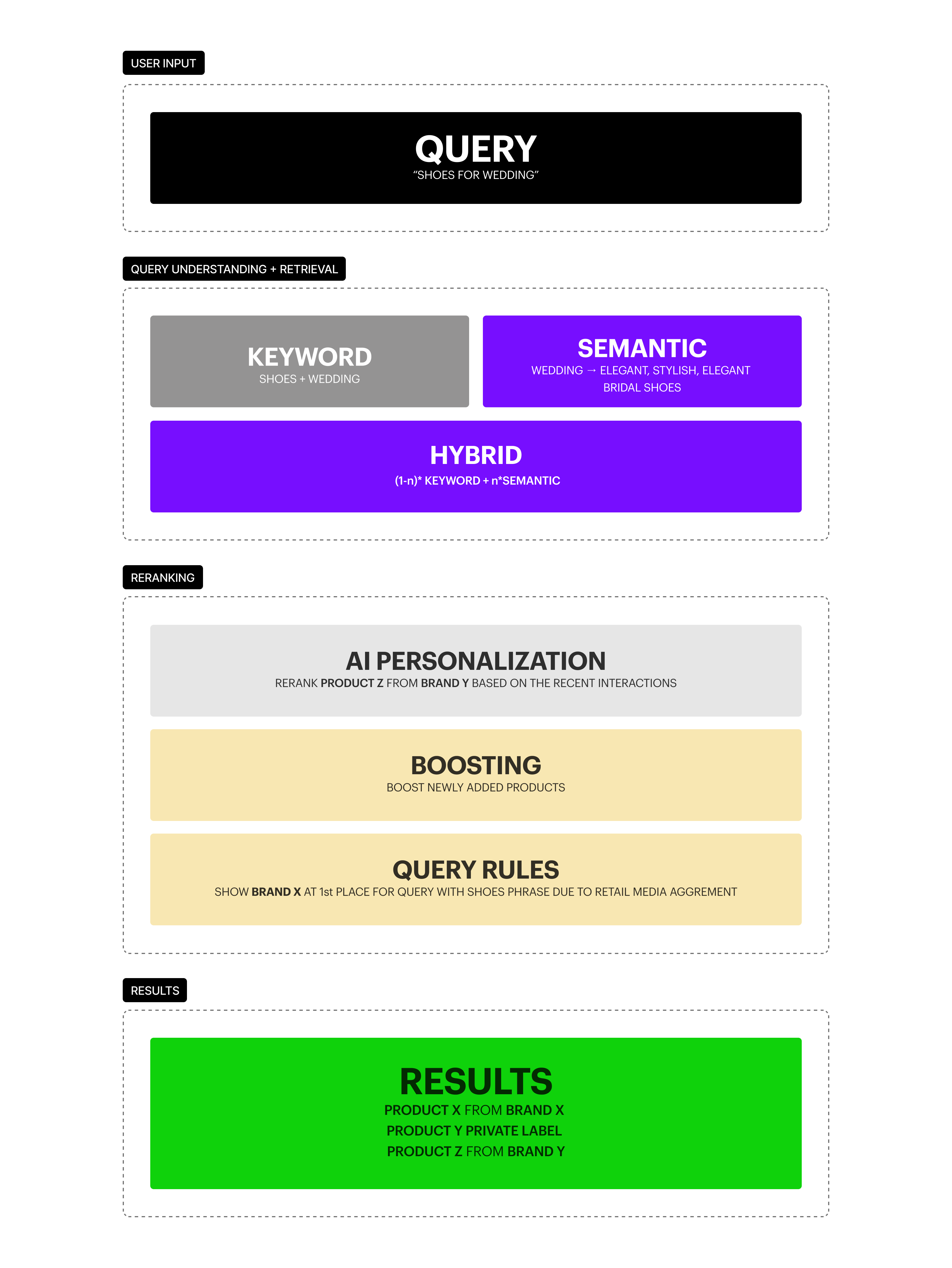
Semantic Search is a search technology in Synerise that uses vector embeddings to understand the meaning behind user queries rather than matching keywords literally. It recognizes synonyms, interprets intent, and handles ambiguous queries using contextual understanding. The feature offers three search modes: keyword (traditional), semantic, and hybrid (combining both). Built-in A/B testing and preview tools allow comparing semantic and keyword search performance. All existing business logic — query rules, filters, boosting — remains fully compatible.
Why Semantic Search Matters
Keyword-based search fails when users describe what they want in natural language rather than using exact product terms. Queries like "laptops for graphic design" or "comfortable shoes for standing all day" require understanding intent, not just matching words.
Semantic Search addresses this by:
- Understanding natural language queries through vector embeddings that capture meaning and context
- Automatically recognizing synonyms and related terms without manual configuration
- Handling ambiguous queries by using contextual clues to infer the most likely meaning
- Combining keyword and semantic search in hybrid mode for the best of both approaches
Key Capabilities
Semantic understanding
Queries are converted into vector embeddings that capture the full meaning, enabling the search engine to understand intent and deliver contextually relevant results.
Synonym recognition
Automatic recognition of product synonyms and related terms — without manual synonym configuration.
Hybrid search mode
Combines keyword and semantic search to deliver the best of both approaches. Keyword search handles exact-match queries efficiently, while semantic search handles natural language and ambiguous queries.
A/B testing and comparison
Built-in A/B testing compares semantic search with keyword search. Preview and comparison tools allow visual side-by-side analysis of search results.
How Semantic Search Works
- Ensure product descriptions in the item feed are comprehensive (a few sentences with relevant attributes).
- Navigate to AI Search settings and enable Semantic Search.
- Select searchable attributes for semantic indexing (typically title and description).
- Choose the search mode: keyword, semantic, or hybrid.
- Use built-in A/B testing to compare performance between modes.
- Monitor search performance metrics (click-through rates, conversion rates, search abandonment).
Example Use Case
A home goods store receives the search query "cozy blanket for movie nights." Keyword search returns results containing the word "blanket" — including electric blankets and baby blankets. Semantic Search understands the intent (soft, warm, large throw blankets for comfort) and returns fleece throws, sherpa blankets, and weighted blankets — ranked by relevance to the context. Using hybrid mode and A/B testing, the merchandising team confirms that semantic search produces 25% higher click-through rates for natural language queries.
FAQ
What is Semantic Search?
An advanced search technology that uses vector embeddings to understand the meaning and context of queries, going beyond keyword matching.
How is it different from keyword search?
Keyword search matches literal words. Semantic Search understands meaning, recognizes synonyms, and interprets natural language intent.
Can I use both keyword and semantic search?
Yes. Hybrid mode combines both approaches, and A/B testing allows comparing their performance.
Does it work with existing business logic?
Yes. All existing query rules, filters, and boosting remain fully compatible with Semantic Search.
Key Facts
| Attribute | Value |
|---|---|
| Feature | Semantic Search |
| Product | Synerise |
| Module | AI Search |
| Purpose | Understand natural language queries using vector embeddings for contextually relevant search results |
| Search modes | Keyword, Semantic, Hybrid |
| Synonym handling | Automatic recognition — no manual configuration |
| A/B testing | Built-in comparison between keyword and semantic search |
| Business logic | Fully compatible with query rules, filters, boosting |
Related Concepts
- Synerise AI Search
- Predictive Filtering in AI Search
- Dynamic Re-ranker
- Search Explain
- Query Suggestions Preview
TL;DR
Semantic Search in Synerise AI Search uses vector embeddings to understand the meaning and context of queries — going beyond keyword matching. It automatically recognizes synonyms, handles natural language and ambiguous queries, and supports hybrid mode (keyword + semantic). Built-in A/B testing compares search modes. All existing business logic (query rules, filters, boosting) remains fully compatible.