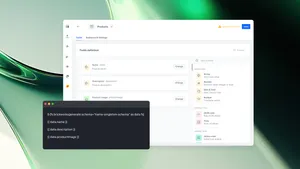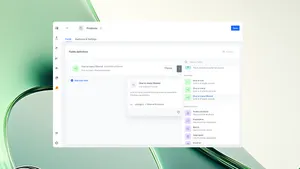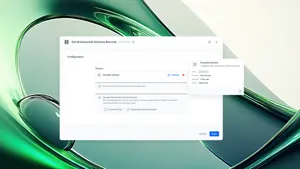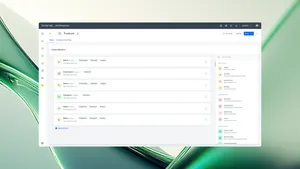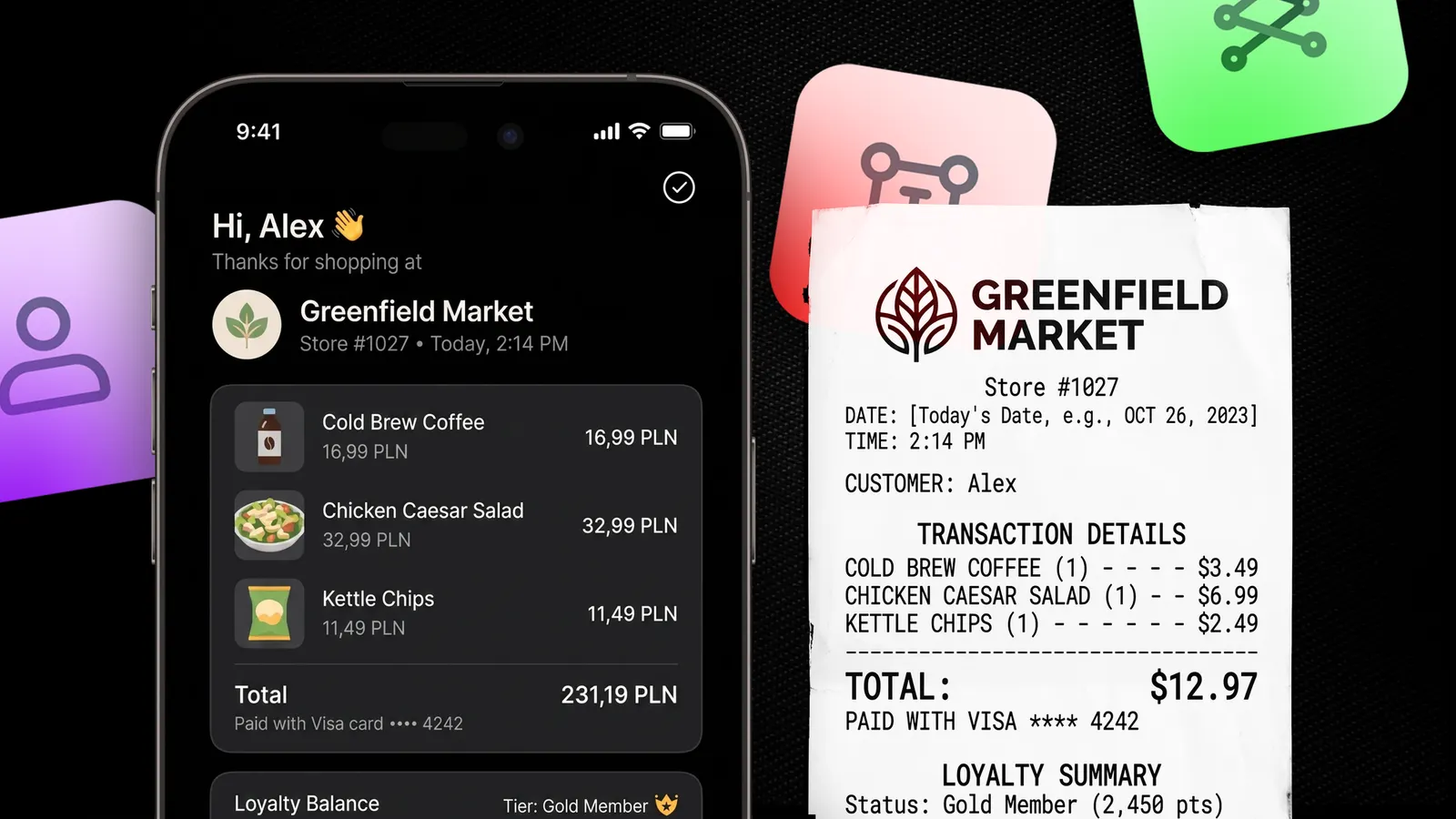
Personalized content is usually hard-coded one surface at a time. Every receipt, every app screen, every email gets its own data wiring — and breaks the moment the data changes. A schema-based behavioral CMS flips that: you define the content model once, and the content assembles itself from live behavioral data at render time. This article explains what a schema-based behavioral CMS is, why it matters, and shows it in action through one worked example — the Personalized Receipt use case.
What is a schema-based behavioral CMS?
A schema-based behavioral CMS is a content management layer where you define a custom schema — types, fields, and relationships — once, then assemble content dynamically from live customer behavior and external systems, validated against that schema at render time. Instead of adapting content to preset templates, the schema matches your processes. Instead of static content, every field resolves against the customer's current state.
In Synerise's behavioral AI infrastructure, this layer is Brickworks.
What is Synerise Brickworks?
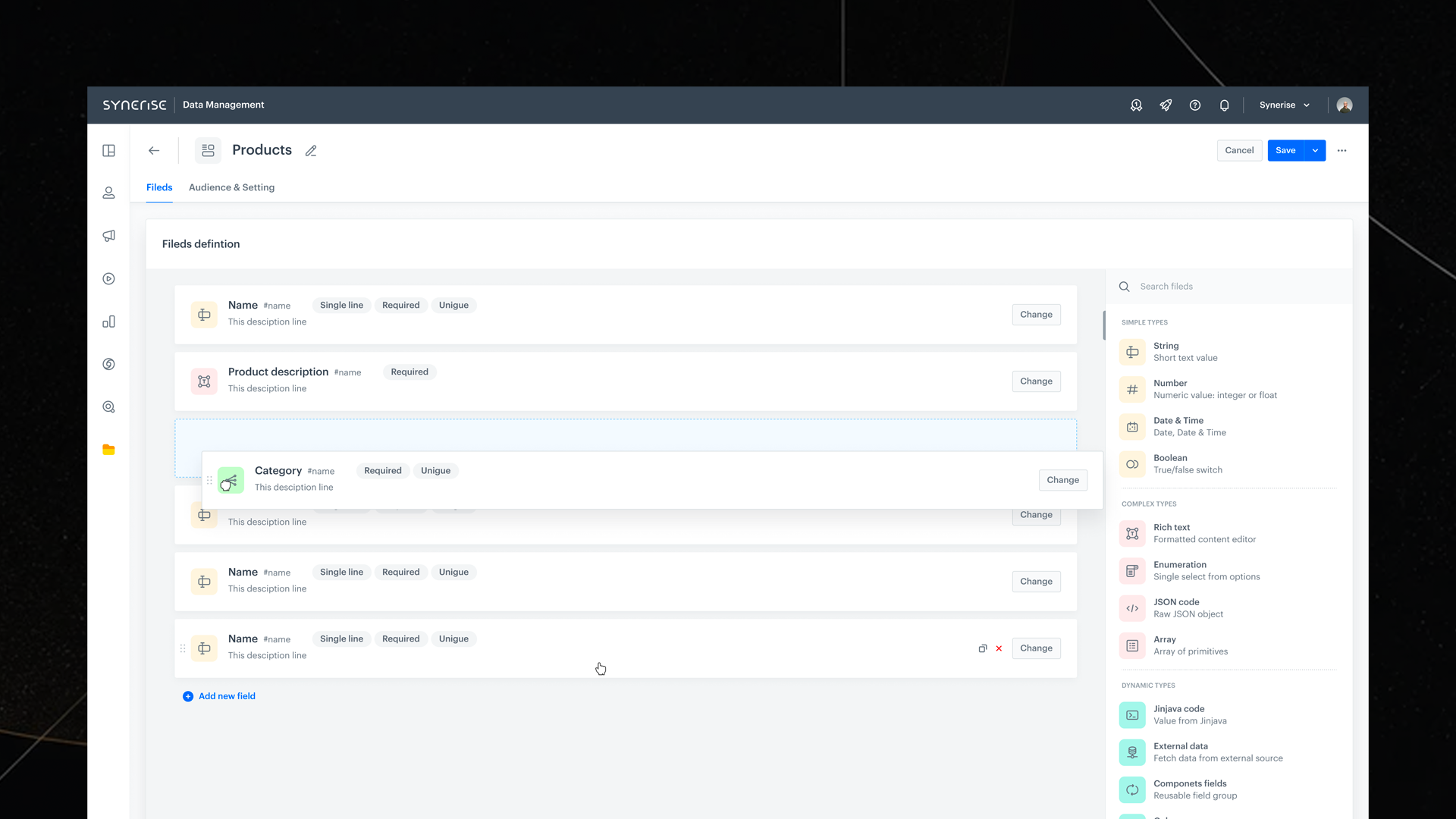
Brickworks is a flexible content management layer that lets you create custom data models tailored to your business. You define the types, fields, and relationships rather than adapting to preset templates.
A single Brickworks schema combines:
- Customer attributes — first name, identifiers, profile data
- Aggregates and expressions — real-time calculations such as loyalty point balances and tiers
- AI recommendations — cross-sell and complementary products
- External data — live calls to systems like ERPs, CRMs, or Synerise APIs
- Catalog lookups — mapping keys (such as a store ID) to other values (such as a promotion)
Brickworks resolves all of these into a single ready-to-render payload. Content is checked against the schema for accuracy, and the layer handles real-time logic and calculations. It is built for complex setups — e-commerce catalogs, loyalty programs, and marketing campaigns. (Brickworks is currently in public preview.)
Why a schema-based behavioral CMS matters
A schema-based behavioral CMS lets one model serve every surface. You define it once, and it renders content from the same live data wherever you need it — which changes the economics of personalized content.
What that unlocks:
- Define once, not per channel — the logic lives in one Brickworks schema, not rebuilt separately for every channel. One definition serves in-app, email, and web push — no separate dev cycle per surface, and no mismatches between what each channel shows and what was specified.
- Content reflects current behavior — fields resolve in real time against the customer's latest state, not a stale snapshot.
- Strict schema validation — content is checked against the model, so what renders is accurate.
- One payload, many data sources — attributes, aggregates, AI recommendations, external APIs, and catalog lookups are combined in a single call.
- Faster to launch, easier to maintain — one schema serves every channel, so personalized content ships quickly and lives in one place.
Use case example: the Personalized Receipt
The clearest way to see a schema-based behavioral CMS in action is a single in-app message that would otherwise take weeks of custom development.
The Personalized Receipt use case displays a personalized digital receipt as an in-app message shortly after an offline purchase. When a customer completes a transaction in a physical store, one Brickworks schema assembles the entire receipt: a personalized greeting, the store name, full transaction details, loyalty status, cross-sell recommendations, and a store-specific coupon — all resolved for that specific customer and that specific purchase.
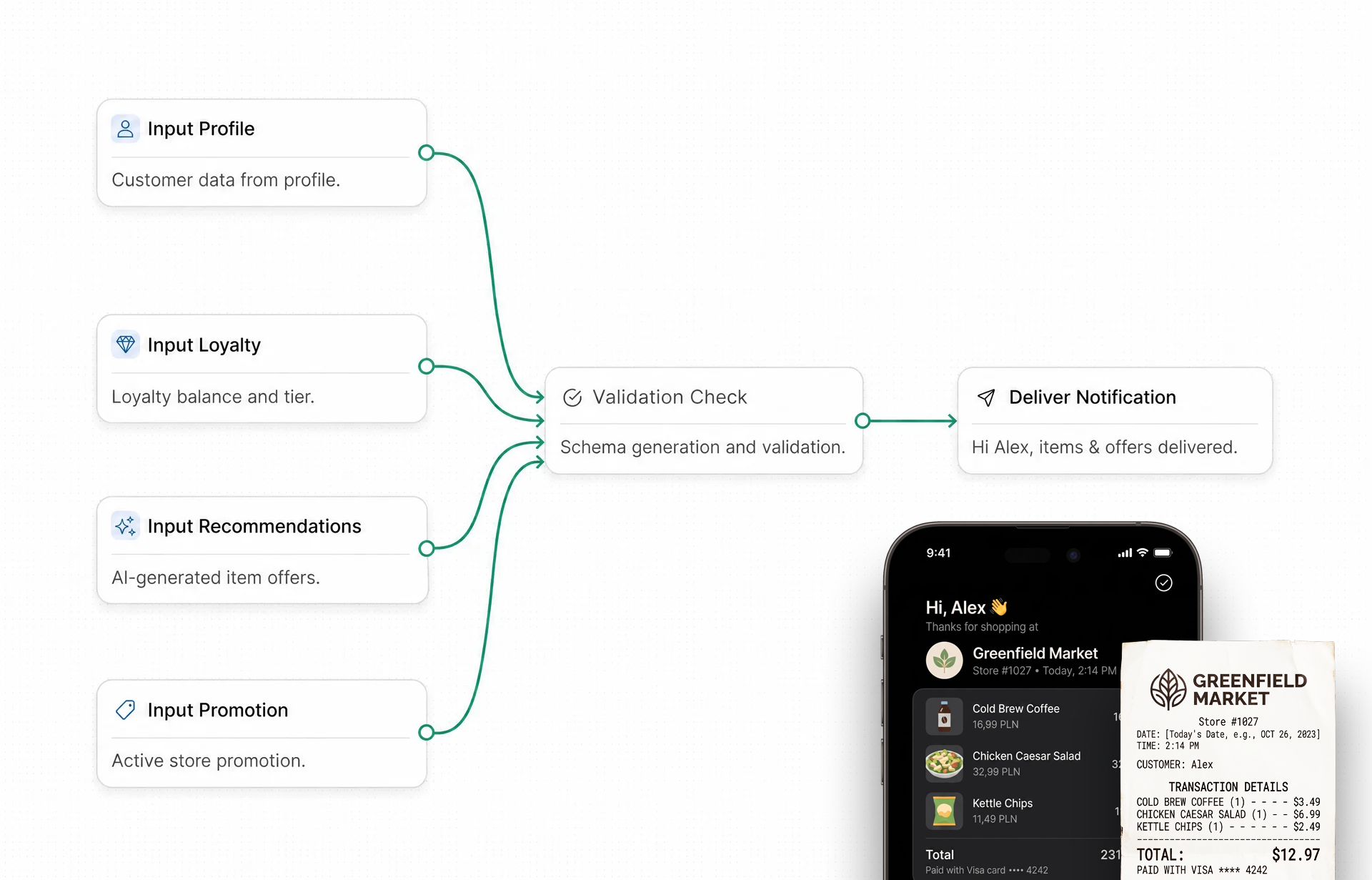
One schema, many data sources
The receipt is not stitched together by the mobile app. It is one Brickworks payload. The schema pulls the first name from the customer profile, the loyalty point balance and tier from real-time calculations, the recommended products from an AI recommendation model, the purchased products from a live data call, and the store-specific promotion matched to the store the customer visited.
Real-time accuracy
The receipt reflects the customer's most recent transaction. It pinpoints the exact products from that purchase, so the list is never wrong. If a piece of data is missing, the receipt still renders cleanly. The loyalty balance shows the customer's current points, not a stale figure.
Reusable across channels
The same schema can power a consistent post-purchase experience on other channels, such as email or web push. The content model is defined once; the surface is a choice, not a rebuild.
How it works
- Model the receipt once — define a schema in Brickworks that maps every part of the receipt to a data source: profile, loyalty, recommendations, transaction, store promotion.
- It fills itself per customer — at the moment of display, the schema resolves every field for the specific customer and their latest purchase.
- A purchase in a physical store starts the flow — the transaction triggers the process automatically, carrying the store the customer visited.
- The app is prompted to show the receipt — after a short pause that lets the purchase data settle.
- Fetched and rendered on the fly — the content is not generated and sent ahead of time. The app pulls it from Brickworks at the moment it displays the receipt, so it always shows the newest data, in one payload, and the app decides when to render.
How it applies in practice
These are application patterns, not industries. Any retailer with offline transactions, a loyalty program, and a product catalog can map onto one or more — what differs is the data, not the build.
- Frequent, low-value repeat purchases — the receipt reinforces the loyalty point balance and hands over a personalized coupon, giving a concrete reason to return to the same store.
- Complementary cross-sell after a purchase — the receipt surfaces products that pair with what was just bought, alongside a store-specific promotion.
- Predictable replenishment — the receipt cross-sells consumables and complements on the natural repurchase cycle, with the customer's loyalty status in view.
- Accessory attach after a big-ticket item — the receipt offers accessories for the just-purchased product and carries the loyalty or warranty layer.
- Drive return to the visited store — points plus a store-specific coupon turn the receipt into a reason to come back to that exact location.
- One schema, every location — a single schema serves every store: the correct store name and a local coupon resolved through the catalog (store ID → promotion), with no per-store content build.
Business value
- Turns a one-off transaction into a return loop. A store-specific coupon gives the customer a real reason to come back.
- Cross-sell at the moment of highest intent. Recommendations land right after the purchase, when the basket context is freshest.
- An offline-to-digital bridge. A purchase in a physical store pulls the customer into the app channel — a one-off transaction becomes an ongoing digital relationship.
- Real-time loyalty engagement. The current point balance and a progress bar push the customer toward the next tier.
- Local relevance at scale. Per-store coupons through the catalog deliver the right offer in every location, with no manual work per store.
- Faster and easier to run. One schema across in-app and email — you launch quickly and maintain content in one place.
- Accuracy builds trust. Content is validated against the schema and computed in real time — so the receipt is always correct: the right points, the right products from that transaction.
FAQ
What is a schema-based behavioral CMS? A schema-based behavioral CMS is a content management layer where you define a custom schema once and then assemble content dynamically from live customer behavior and external data, validated against that schema at render time. In Synerise, this layer is Brickworks.
How is a schema-based behavioral CMS different from a traditional CMS? A traditional CMS stores and serves predefined content. A schema-based behavioral CMS resolves content against the customer's current behavior and live data sources at the moment of render, so the same schema produces a different result for every customer and every context.
What is Synerise Brickworks? Brickworks is Synerise's flexible content management layer. It lets you define custom data models and combine customer attributes, aggregates, expressions, AI recommendations, external data, and catalog lookups into a single renderable payload, using Jinjava templating for real-time logic.
Can a schema-based behavioral CMS combine data from external systems? Yes. Brickworks can connect and combine live data from external systems such as ERPs, CRMs, or APIs in real time, alongside internal behavioral data, in the same schema.
Can one schema be reused across channels? Yes. A single Brickworks schema can power consistent content across channels — for example in-app messages, email, and web push — without rebuilding the data model for each one.
Does the content update in real time? Yes. Fields resolve against the customer's current state at render time. With the Personalized Receipt, for example, the loyalty point balance and the list of purchased products reflect the most recent transaction, not a cached snapshot.
Explore Brickworks
Key Facts
| Attribute | Value |
|---|---|
| Concept | Schema-based behavioral CMS |
| Synerise component | Brickworks |
| Category | Behavioral AI infrastructure |
| Availability | Public preview |
| Data sources combined | Customer attributes, aggregates, expressions, AI recommendations, external data (ERP/CRM/API), catalog lookups |
| Templating | Jinjava (real-time logic and calculations) |
| Validation | Strict, against the custom schema |
| Channel reuse | One schema across in-app, email, web push |
| Worked example | The Personalized Receipt (post-purchase in-app receipt) |
Related concepts
- Synerise Brickworks
- Behavioral AI infrastructure
- In-app messages
- AI recommendations (cross-sell)
- Aggregates and expressions
- Catalogs
- Jinjava templating
- Real-time personalization
TL;DR
A schema-based behavioral CMS lets you define a content model once and assemble personalized content from live behavioral and external data at render time. In Synerise's behavioral AI infrastructure, that layer is Brickworks. It combines customer attributes, aggregates, expressions, AI recommendations, external data, and catalog lookups into a single validated payload, reusable across channels. The Personalized Receipt is the worked example: one Brickworks schema assembles a complete personalized digital receipt — greeting, transaction details, loyalty status, recommendations, and a store-specific coupon — and renders it as an in-app message after an offline purchase.