Chief Product & Technology Officer, Michal Zych, on why culture, not technology, is the real catalyst for digital transformation at Castorama Poland — and why, in that context, the company selected Synerise as its technology partner.
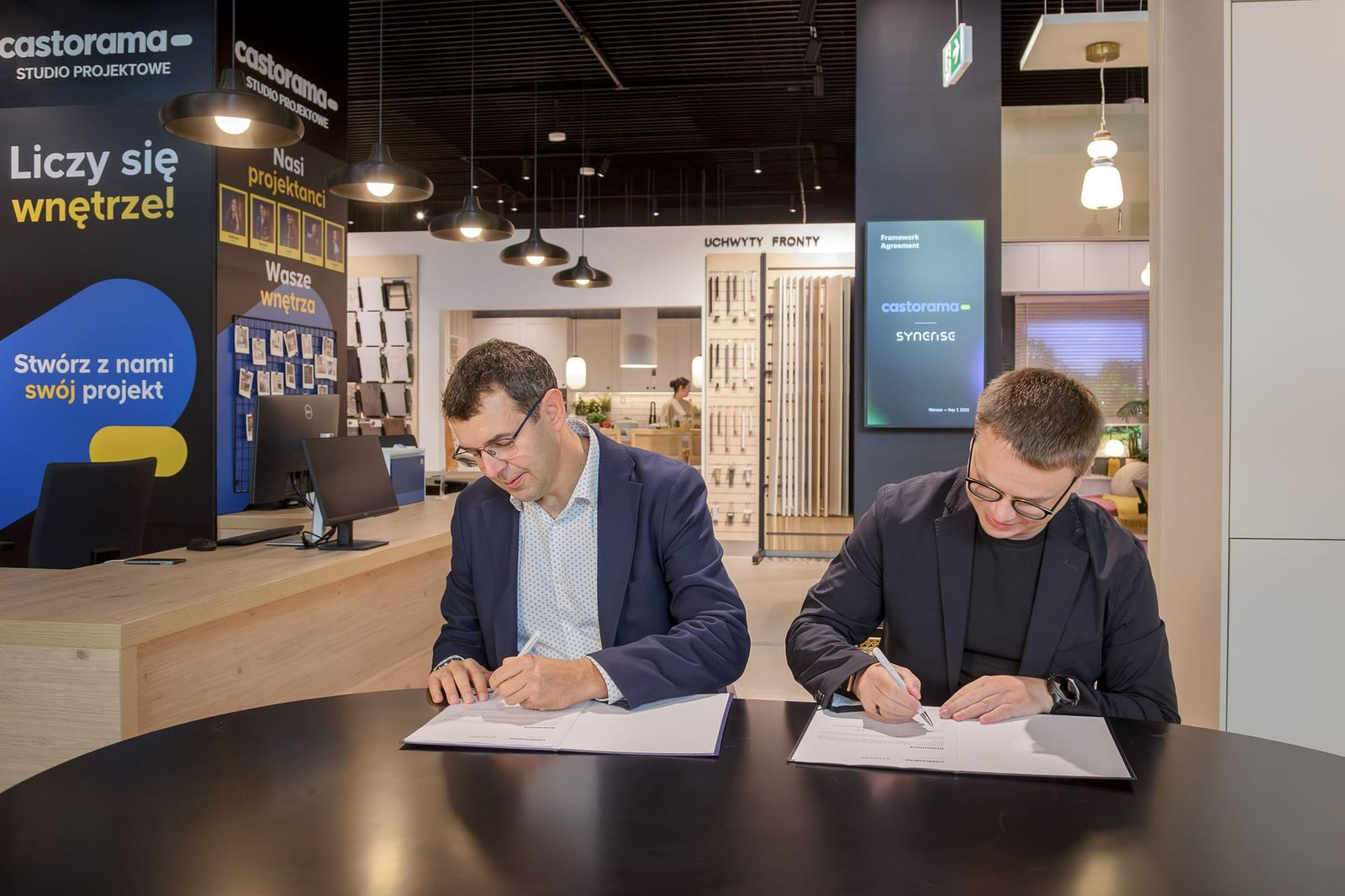
"While Castorama has invested heavily in developing internal engineering expertise, Michal is equally clear about the importance of strategic partnerships. The difference lies in how those partnerships are structured. Rather than outsourcing responsibility, he looks for partners who strengthen internal capability while sharing responsibility for successful delivery. A key example is technology partner Synerise, whose solutions support elements of Castorama’s customer engagement and loyalty ecosystem. What impressed Michal was not simply the sophistication of the new CRM personalisation platform, but the company’s philosophy. “They’re saying, ‘This is our tool. It’s powerful. These are the possibilities. But how you use it, that’s with you.’” For Michal, that approach reinforces an important principle. Technology partners should provide expertise, platforms and support, but ownership of customer outcomes must remain with the business itself. “You take responsibility for the business outcome,” he says. “Technology is just a tool. Of course, there are good and bad tools, that’s why we partner with Synerise - we’re conscious of choosing the best in class.”
This article is the reprint of what was initially published in Interface Media blog (https://interface.media/blog/executiveinsights/castorama-poland-reinventing-technology-for-the-future/)
Castorama is one of Europe’s leading home improvement retailers, specialising in DIY, home renovation, decoration, gardening, kitchens, bathrooms and building materials. Founded in France in 1969, the company has grown into a trusted destination for homeowners and trade professionals seeking quality products, practical advice and innovative solutions to improve their living spaces. Today, Castorama operates extensively in France and Poland and is part of Kingfisher plc, an international home improvement group that also owns B&Q, Screwfix, Brico Dépôt.
For Michal Zych, Chief Product & Technology Officer at DIY retail firm Castorama, digital transformation is not just about replacing legacy systems or implementing the latest technologies. It is about creating an organisation capable of learning, adapting and delivering value at speed. Three years into his journey at Castorama Poland, that philosophy is reshaping everything from product development and engineering to data, AI and customer experience.
“The fight for individual customers begins in the digital realm,” says Michal, “Competition is no longer limited to DIY retailers.”
Technology Transformation Starts with Culture
When Michal arrived at Castorama Poland three years ago, the business already shared Kingfisher Group’s ambition to become a faster, more agile organisation capable of supporting modern unified commerce. The challenge was not a lack of ambition. It was creating the capabilities needed to realise it.
At the time, many of the disciplines now considered fundamental to digital product organisations – including product ownership, architecture, customer experience design and integrated engineering teams – either did not exist locally or were still emerging.
Rather than simply modernising technology, Michal focused first on building those capabilities. “We created digital product, technology and data competencies that were totally new for Castorama.”
Working alongside Kingfisher’s Engineering Centres, he helped establish development teams capable of retaining technical knowledge inside the business while working directly alongside operational colleagues to solve customer problems.
Building a Learning Organisation
If there is one phrase that recurs throughout Michal’s thinking, it is “learning organisation”.
For him, cultural change is the foundation upon which every other aspect of transformation depends. He describes it as creating an environment where curiosity, entrepreneurship and continuous learning become everyday behaviours rather than corporate slogans.
“The culture I want to sustain is very simple,” he says. “Make an impact. Stay together. Ask the right questions. Be curious. And have fun.”
Importantly, that culture extends well beyond technology teams. Successful digital transformation, he argues, requires every part of the organisation to think differently about value creation.
That means replacing project-based thinking with product thinking, encouraging cross-functional collaboration and creating shared ownership of customer outcomes. It also means helping colleagues develop entirely new skills. Artificial intelligence provides one example.
Rather than restricting AI expertise to technical specialists, Michal believes every employee should understand its potential and limitations. “Basic knowledge of AI is important for everyone in the company, no matter their role.”