Introduction
As competition for user attention continues to intensify, mobile applications are increasingly evolving beyond purely transactional tools. They are becoming spaces where brands build ongoing relationships, encourage exploration, and create everyday touchpoints with customers.
In this context, gamification and lightweight mobile games are gaining traction as a way to introduce more frequent, positive interactions. Instead of focusing only on service or sales, apps can provide moments of entertainment that naturally extend session time and strengthen emotional connection with the brand.
For Orange, introducing mobile games into the Mój Orange app was a natural step in its evolution toward a broader digital experience platform. The goal was not only to provide functional utility but also to create a more engaging environment where users could interact with the brand in a relaxed and enjoyable way while still discovering offers and services.
“We wanted the Mój Orange app to be not only a tool where our customers handle service needs or buy services and devices, but also a place that can, in a light way, enrich contact with our brand. What made this possible at scale was the flexibility of the Synerise platform. Mobile games became an interesting format that introduces fun and positive emotions, while encouraging users to explore the app more freely. We tested how a format known from other industries works in a telco app environment—where technology, play, and offer can meet in one user experience.”
Grzegorz Popis
Lead of Online Communication Personalization and AI, Orange Polska

Business Value
Introducing mobile games into the Mój Orange app delivered a measurable impact across engagement and commercial performance.
- Higher retention and visit frequency – games created recurring reasons to return.
- Longer sessions and stronger offer exposure – extended time in app increased visibility of products and promotions.
- Richer behavioral data – gameplay interactions strengthened personalisation and targeting accuracy.
- Scalable execution model – new game editions and campaign variants could be launched without full app releases.
Thanks to the use of gamification, the application has been enriched with interesting user experiences.
Challenges
The development of the gamification was shaped by several objectives:
- Increasing user engagement within the mobile app
- Encouraging regular interaction beyond transactional needs
- Presenting Orange offers in a more natural, discovery-driven way
- Extending session duration and frequency of visits
- Strengthening positive brand perception
- Expanding personalisation opportunities within the app
A broader strategic goal was to explore how gaming mechanics — widely used in other industries — would translate into the telco app environment and whether they could effectively support both engagement and commercial outcomes.
Solution
Mobile games integrated into the app ecosystem
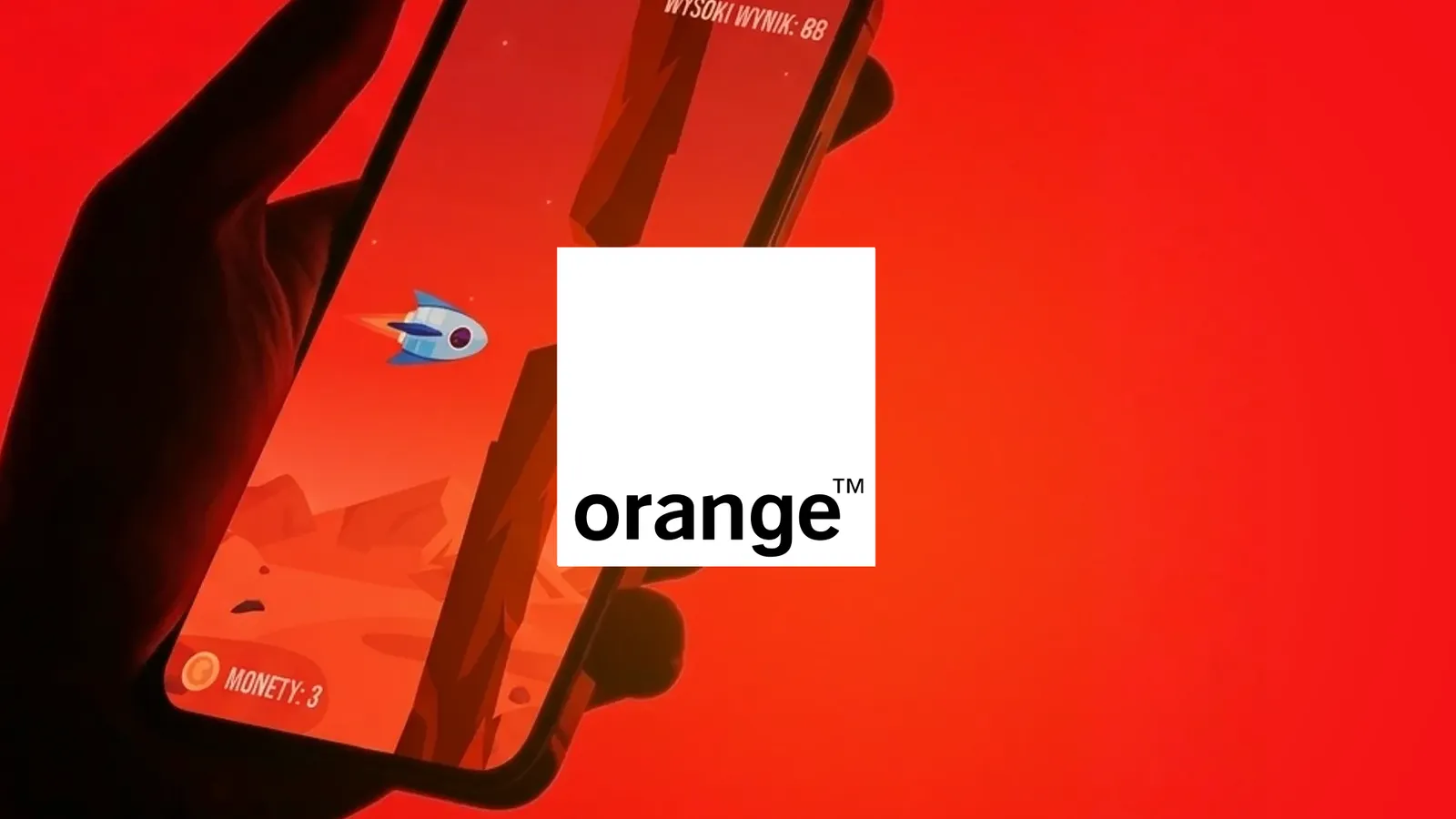
Orange introduced a portfolio of casual mobile games embedded directly within the Mój Orange application. Each game combines simple mechanics with competitive elements such as rankings, repeat play incentives, and reward potential.
Snake
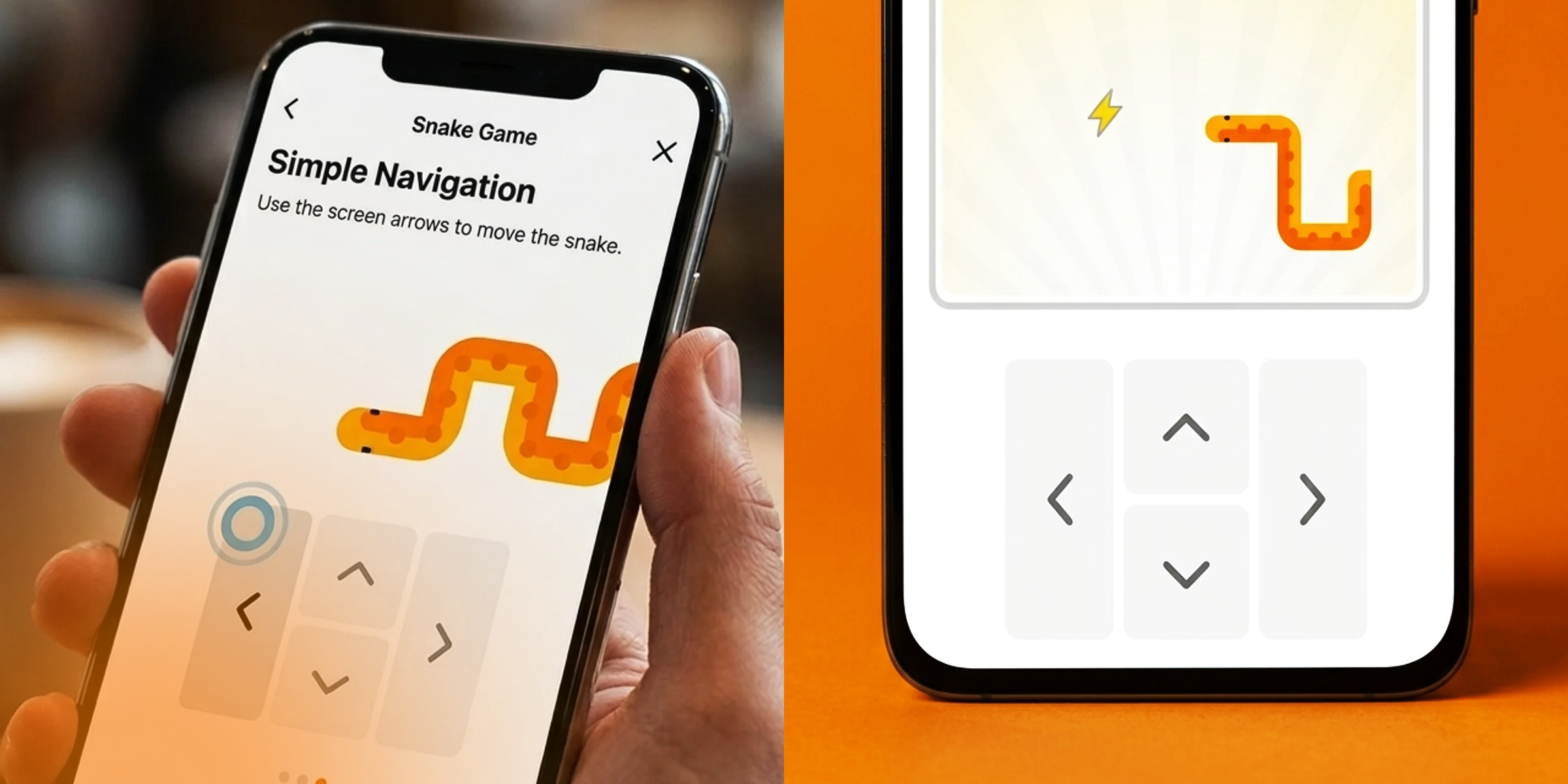
Inspired by the classic Snake game known from early mobile phones, this version asks players to control a snake collecting popcorn while avoiding collisions. Each collected item increases both the score and the snake’s length, gradually reducing available movement space and increasing difficulty. The game interface includes simple directional controls, instant restart options, and a clear score display.
After each session, players see their individual score alongside aggregated rankings and historical best results. This creates a continuous improvement loop — users naturally compare results over time or against other players.
The familiarity of the mechanic creates instant recognition and positive associations for many users. This lowers the barrier to entry and encourages frequent short play sessions.
Primary objectives:
- frequent engagement and recurring app visits
- creating light, low-effort engagement
- reinforcing positive brand associations through nostalgia
Memory Game
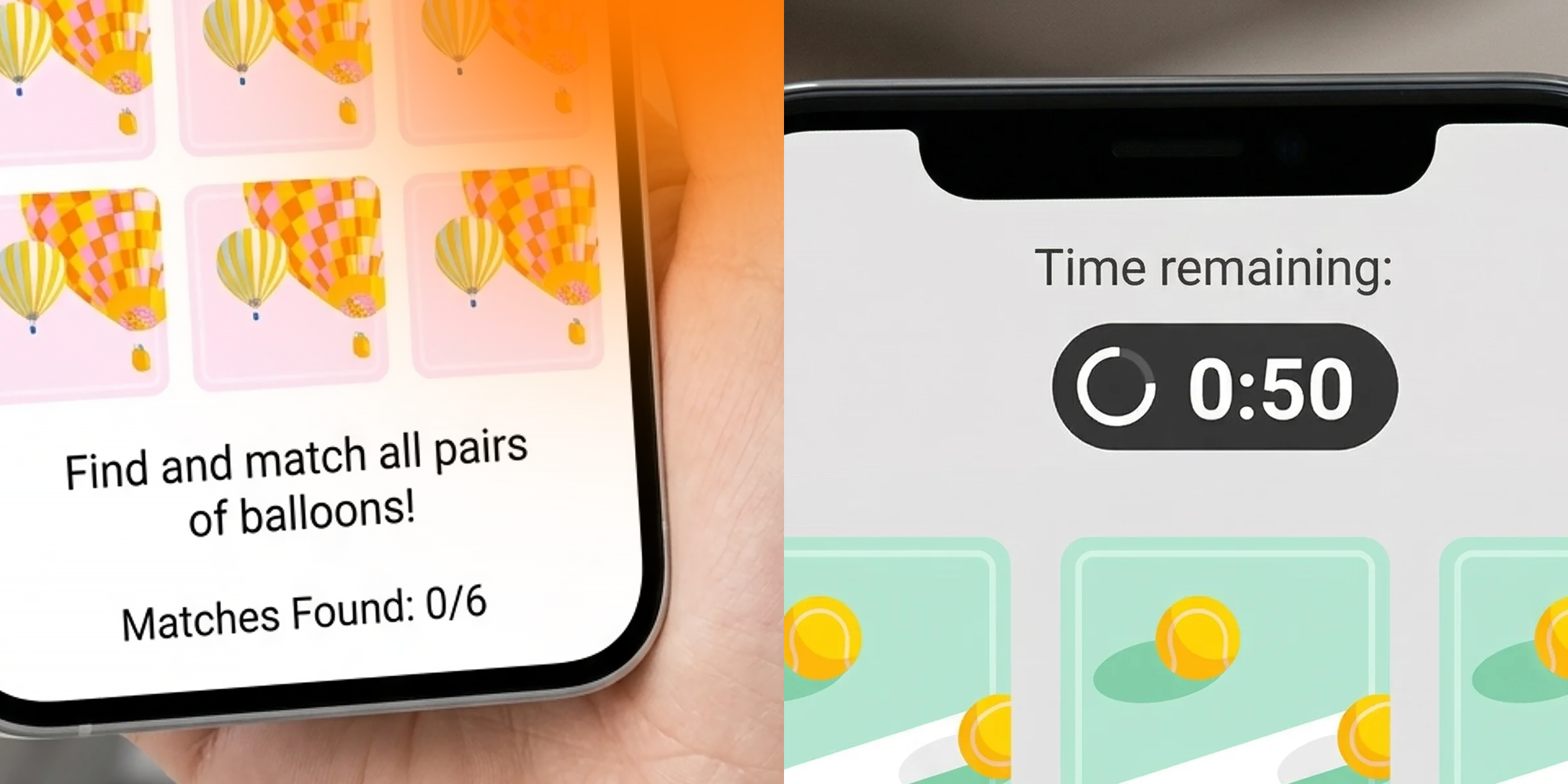
Memory is a classic card-matching game where players uncover cards in search of matching pairs, aiming to complete the board in as few moves as possible.
This shifts the mechanic from purely cognitive matching to a speed-and-accuracy exercise.
What made this format particularly useful was its flexibility as a branded content space. In selected editions, card backs feature partner products, allowing users to become familiar with devices or offers in a subtle, non-intrusive way.
Primary objectives:
- combining engagement with soft product discovery
- providing an educational yet entertainment-oriented format
- enabling partner exposure without traditional advertising pressure
One distinctive aspect of this format is its adaptability as a branded content space. Card designs can incorporate partner products, themed graphics, or campaign visuals without disrupting gameplay. This makes the game suitable not only for engagement but also for subtle product discovery and contextual communication.
Its flexible structure also supports rotating themes, difficulty variations, or time-limited challenges, which helps maintain freshness without requiring major redesign.
Galactic Adventure
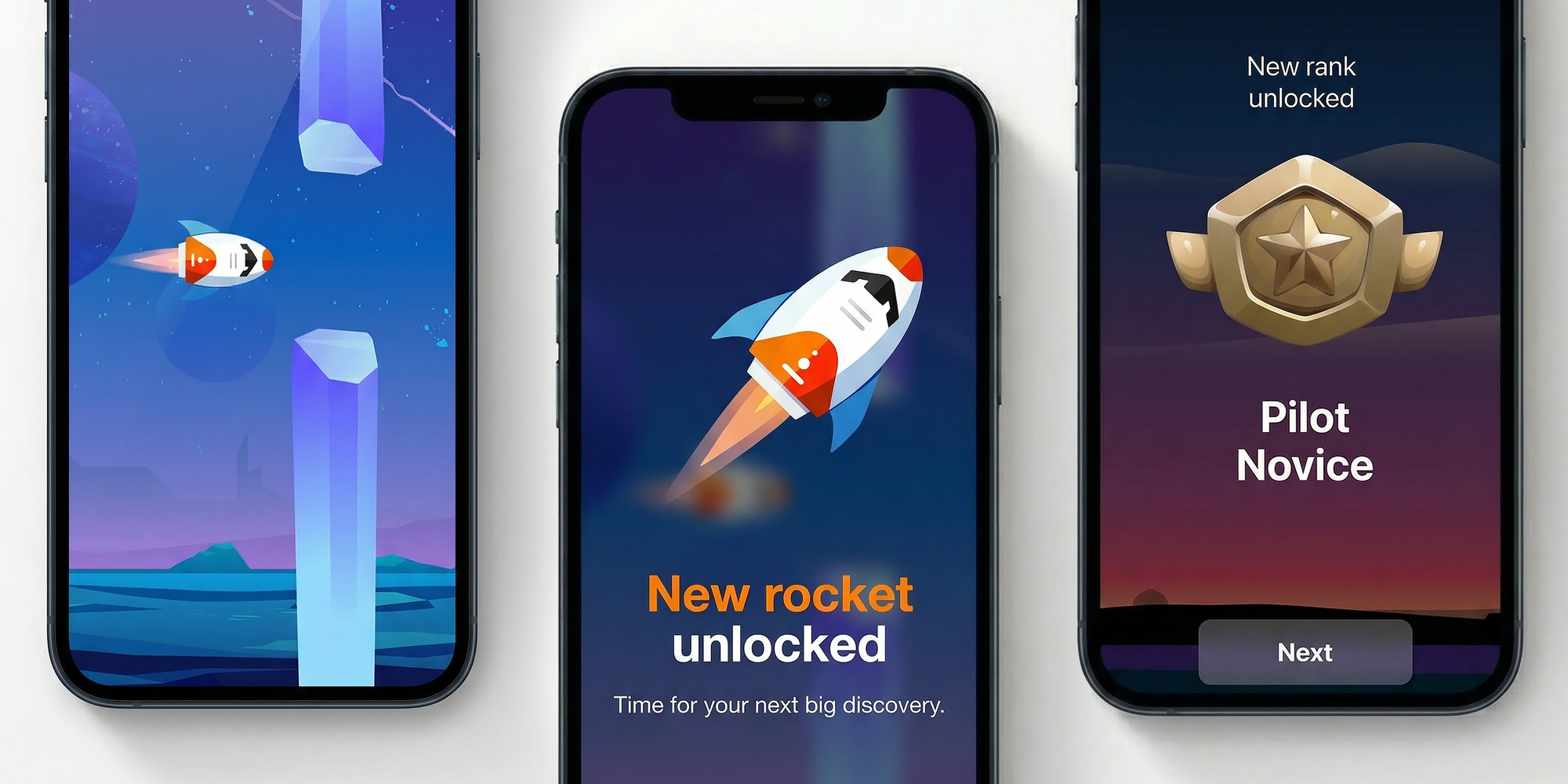
This arcade-style game places the player in control of a spacecraft navigating through space, collecting objects while avoiding obstacles. Points are awarded for both collected items and survival time.
The interface shows unlockable ranks (e.g. beginner pilot badges), new spacecraft availability, and level progression indicators. These elements transform gameplay into an ongoing progression experience rather than isolated sessions.
The visual environment changes across stages, suggesting a structured level system.
Progression plays a significant role:
- unlocking new locations
- increasing difficulty levels
- earning badges and achievements
These mechanics encourage users to return regularly to improve scores and unlock additional content. Badge notifications and “new rank unlocked” messages provide explicit feedback loops.
The presence of ranking options and level selection screens indicates that players can revisit stages, improve results, or compare performance over time.
Primary objectives:
- longer engagement sessions
- deeper interaction loops
- reinforcing habit-building behaviour through progression systems
Such mechanics also open opportunities for mission-based campaigns, time-limited challenges, or personalised reward thresholds.
Runner (“Biegiem”)
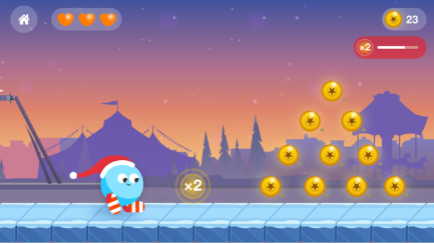
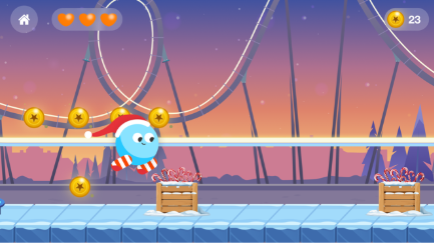
This endless runner game involves guiding a character along a dynamic obstacle course, reacting quickly to barriers while collecting items and accumulating points over distance.
The Runner game is built around fast reflex interaction combined with visible progression elements such as lives (heart icons), collectable coins, and distance tracking. The environment scrolls dynamically with obstacles, collectable items, and occasional boosters. This structure supports both immediate scoring satisfaction and longer-term improvement goals.
The gameplay is intentionally fast and intuitive, making it suitable for short sessions that fit naturally into everyday app usage patterns.
Because the game is continuous until failure, it naturally encourages “one more try” behaviour. The simple control scheme also makes it accessible even during very short app visits.
Primary objectives:
- quick engagement bursts
- frequent repeat gameplay
- maintaining app visibility in daily routines
Because of its pace and simplicity, this format works well for event-based campaigns, seasonal visuals, or reward-driven competitions.
Additional value of the gaming layer
Beyond individual game mechanics, the broader advantage comes from how games integrate with the digital ecosystem:
- They create non-transactional entry points into the app
- They support discovery-driven interaction with offers and services
- They generate behavioral data useful for personalisation
- They enable experimentation with rewards, rankings, and campaign triggers
Since games are deployed as flexible in-app interactive creations, new scenarios can be introduced without requiring full application updates. This significantly lowers the operational barrier for testing new engagement concepts, seasonal campaigns, or partner collaborations.
Over time, such mechanics can evolve toward more personalised gameplay, social interaction features, or loyalty-driven experiences, depending on business priorities and user response.
All games were designed modularly, enabling flexible seasonal editions, campaign-specific visual variants, and evolving reward mechanisms without major development overhead.
How it works
Technology and Synerise context
The games are delivered as interactive creations within the In-App Messages, where gameplay layers can be built using HTML, CSS, and JavaScript. Thanks to this approach, new editions or visual variants can be deployed and modified directly on the platform side, without requiring updates to the mobile application itself (through Mobile SDK integration).
From a data perspective:
- gameplay events (game start, completion, scores) feed user profiles in real time
- analytics layers (expressions) support segmentation, scoring logic and points calculation.
- expressions enable also reward handling, ranking rules, and thresholds
- cross-channel communication (push, email, in-app messages) promotes participation
From the user perspective, games are primarily accessible in the “For You” section of the app, where personalised offers, discounts, and partner promotions are presented. Depending on the campaign scenario, they may also appear on the main application dashboard. Their visibility is additionally supported by push notifications, email communication, and in-app messages, helping effectively engage users and direct them toward gameplay.
This setup allows entertainment content, personalization, analytics, and commercial messaging to operate within one consistent environment.
Interactive game delivery via In-App Messages (Mobile SDK)
The core technological layer enabling mobile games in the Mój Orange app is the In-App Messages functionality delivered through the Synerise Mobile SDK. This module allows fully interactive content to be displayed directly inside the running mobile application as dynamic overlays or embedded interface elements.
Because in-app messages support custom HTML, CSS, and JavaScript, they can host complete game environments — including gameplay mechanics, animations, timers, scoring interfaces, rankings, and reward prompts. Content is rendered dynamically through the SDK, which means new game editions, visual updates, or campaign-specific mechanics can be introduced without requiring a new app release.
An important element of this setup is the growing library of predefined in-app templates, including interactive formats that can be adapted for gamification use cases. For example, memory-style game formats can be deployed relatively quickly and then personalised with branded visuals, promotional content, or campaign-specific mechanics.
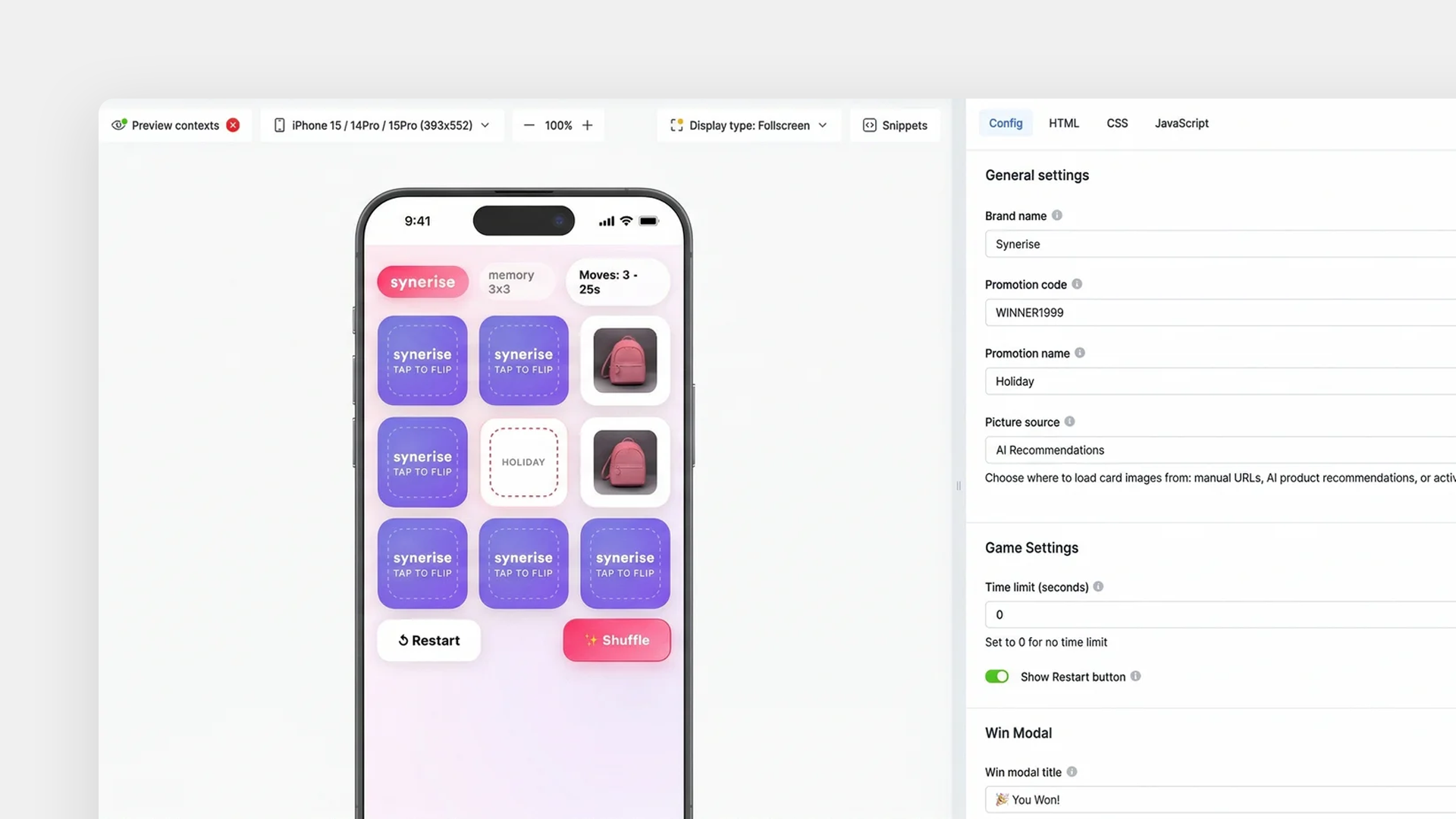
The In-App Messages module enables:
- dynamic display of games based on behavioural triggers or segmentation
- rapid iteration of visuals and mechanics without development releases
- integration with deep links, custom actions, or offer placements
- tracking impressions, interactions, and gameplay-related events
Expressions as the real-time game logic layer
Gameplay logic, scoring systems, and reward conditions are typically handled using Expressions, which allow building custom indicators and calculations directly on behavioural data streams.
Expressions can process events generated during gameplay — such as game starts, results, completion rates, or interaction patterns — and translate them into:
- points, rankings, or achievement thresholds
- reward eligibility conditions
- progression logic or incentive mechanisms
- triggers for personalised follow-up communication
- behavioral scoring connected to broader engagement data
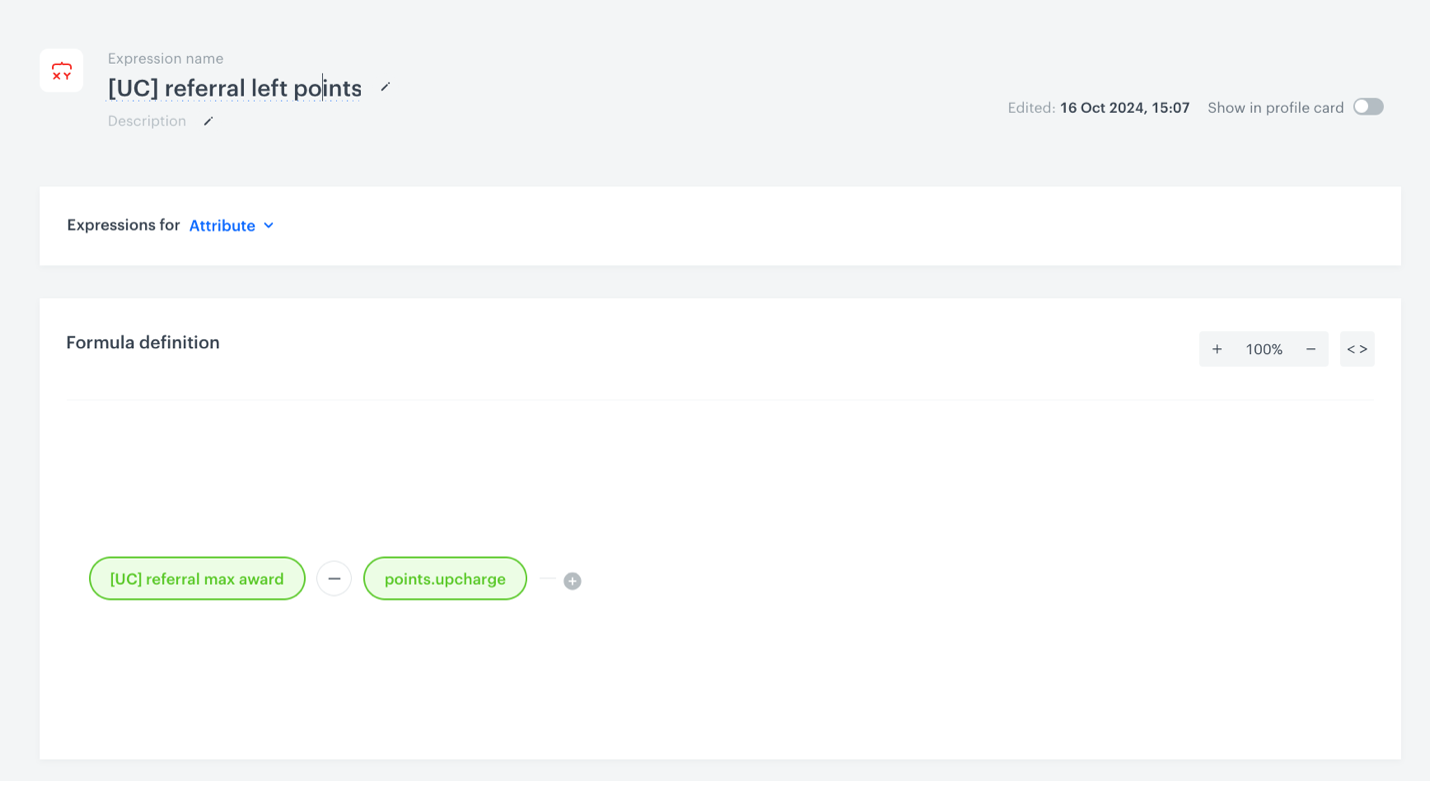
Because Expressions operate in real time and can be modified, they allow ongoing optimisation of game mechanics and reward strategies. This makes it possible to experiment with engagement models while keeping the technical implementation stable.
Experience Hub orchestration of communication around games
Beyond the game itself, Experience Hub provides orchestration of communication flows surrounding gamified interactions. It allows coordinating multiple communication channels — including push notifications, email, SMS, web, and mobile app messaging — within a unified customer journey framework.
This supports scenarios such as:
- inviting users to play or launching seasonal game editions
- reminding users to return or complete challenges
- distributing rewards based on gameplay outcomes
- connecting gameplay with contextual offers or promotions
- monitoring engagement metrics across campaigns
Because Experience Hub operates on unified customer data, gameplay interactions can be combined with other behavioural signals to support personalisation and more consistent digital experiences.
Results
Integrating gamification into the shopping experience delivered measurable improvements across key engagement metrics:
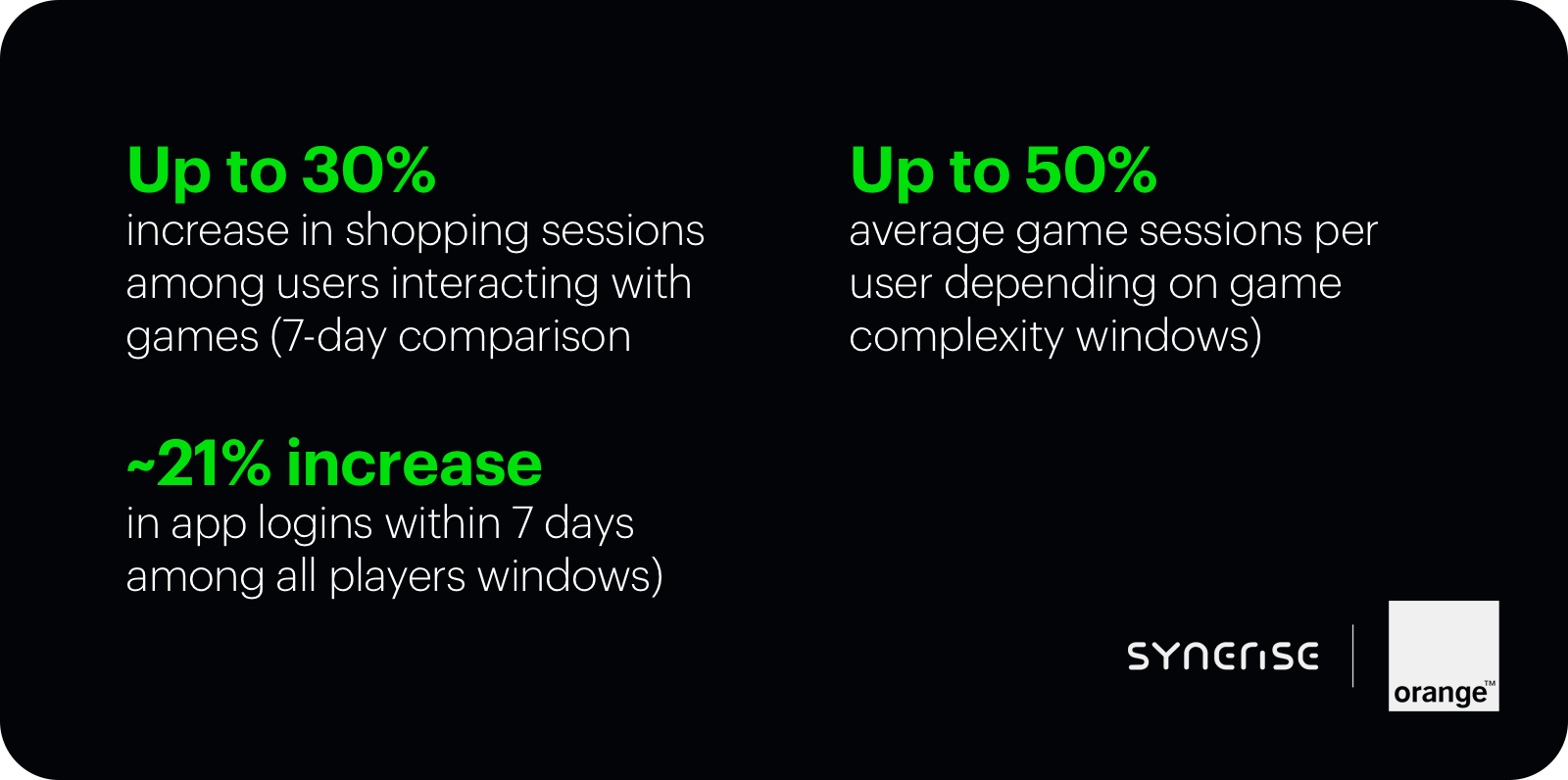
- Users who interacted with games showed up to a 30% increase in shopping sessions within a 7-day comparison window.
- Average game sessions reached up to 50 per user, depending on game complexity.
- App logins increased by approximately 21% within 7 days among all players.
Summary
Looking ahead, Orange plans to further develop gamification as one of the important elements in building modern and engaging digital user experiences. In the next stages, the focus will be on strengthening personalisation of gameplay so that game mechanics, communication, and reward systems are increasingly aligned with user behaviors and preferences.
From a longer-term perspective, games may evolve toward more social and shared experiences, enabling users to interact with others, participate in joint challenges, or engage in themed events. The capabilities provided by the Synerise platform make it possible to combine these experiences with communication, personalisation, and engagement mechanisms, supporting stronger relationships with the app and fostering a sense of participation with a broader digital services ecosystem.
Download the Case Study as a PDF file